


So you’ve finally gotten your new Facebook ads up and running…what next?
The ongoing process of monitoring and optimizing key Facebook ad metrics is crucial to the success of your advertising campaign.
In order to measure success, you’ll need to know which Facebook ad metrics are the most important and why.
What kind of campaign are you running?
The most important Facebook ad metrics, or KPIs (key performance indicators), vary per objective, depending on the type of campaign you’re running.
Let’s take a deep dive into some different types of popular campaigns to run and their objectives.
1. Boosted posts
Boosting a post on Facebook is a fantastic way to increase the engagement (likes, reactions, comments, shares) on your content.
With all of Facebook’s recent algorithm changes.
They’ve made it very difficult for businesses – big and small – to gain any type of organic reach or engagement.
Facebook has really become a pay-to-play platform for businesses.
So in order to have the opportunity to interact with your audience, you’ll need to back your posts with some money.
Posts that aren’t boosted only reach about 1% of the total audience following your Facebook page organically!
How much money do you need to spend on boosted posts, exactly? This usually depends on the type of post and how important the amount of reach is.
For example, if you’re running a contest or giveaway and want to reach as many people as possible.
We recommend allocating a larger budget and running the campaign for a longer period of time.
We might boost this type of post for one month with a $50-$100 budget.
For a standard boosted post that you simply want to increase engagement on (brand or sell post).
We recommend boosting for 3-5 days with a $5-$10 budget.
As you may have guessed, the most important Facebook ad metrics for boosted posts include any type of post engagement:
Likes, reactions, comments, and shares.
When a piece of content generates a lot of likes, it quickly gains credibility in the eyes of the…
…people who come across it; thus, the “like” metric becomes very authentic.
This is why you often find that a social media post with likes will generally attract even more likes and become an engaging piece of content.
The number of comments your post receives is directly related to the relevancy of your content, as well as how entertaining and informative it is.
The number of shares you generate shows how loyal your prospects or customers are.
And how confident they are in referring or recommending your brand to others.
Social media engagement should be seen as one of the most essential social media KPIs that you can measure both long-term and short-term.
It goes deeper than just the number of followers you have, and it tells you how many of them are actually sharing your…
…content, liking it, and finding it useful.
The more engagement your content receives, the better it is.
Some more important Facebook ad metrics for boosted posts include reaching page likes and the cost per post engagement.
As shown in the image above, you can hover over the orange bar underneath a post to see its organic and paid reach.
The paid reach comes from the boosting of a post, so this makes results for the reach metric easily measurable.
As shown below, the target audience for your boosted post can also choose to like your Facebook business page.
Gaining page likes is significant, as we’ll discuss shortly, because it expands your audience and who sees your content in their newsfeed organically.
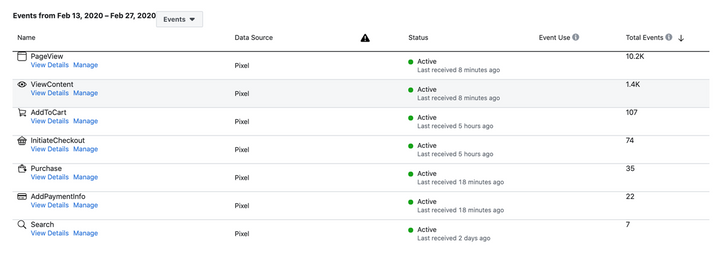
The social media advertisements generated over 10,000 views and each page view cost only $0.12.
2. Page like ads
Facebook page like ads are one of the best ways to increase your followers on Facebook.
These ads incentivize people to “like” your Facebook page, so they will have the chance to see the content you create.
As previously mentioned, Facebook has really become a pay-to-play platform for businesses.
So you’ll need to run these page like ads to grow your audience and reach more people.
Page like ads increase your followers, reach, and brand awareness, so it’s a win-win-win when running these ads!
Similarly to boosted posts, page like ads do require a dedicated advertising budget to run.
But these are on an ongoing monthly basis, rather than a set timeline of one week or one month.
We recommend a minimum of $150 per month because in our experience, we’ve seen this as the foundation for a successful page like ad campaign.
We think of three budget options when running page like ads.
In a good – better – best model: $150 per month (good), $300 per month (better), or $500 per month (best).
The most important Facebook ad metrics for page like ads is the engagement – the actual page likes.
The primary goal when running these ads is to increase the number of page likes you’re receiving within your set budget and…
…decrease the cost per page like, thus allowing more page likes per dollar spent.
Some secondary Facebook ad metrics for page like ads include reach, cost per page like, and the relevance score.
Facebook wants to show people the ads that are most pertinent to them.
That’s why they’ve always used relevance as a factor in determining how they deliver ads.
Taking relevance into account helps ensure that people see ads that matter to them, leading to a better experience for people and businesses alike.
Relevance score is calculated based on the positive and negative feedback an ad receives from its target audience.
The more positive interactions an ad receives, the higher the ad’s relevance score will be.
On the other hand, the more times people hide or report an ad, the lower its score will be.
All ads, including page like ads, receive a relevance score between 1 and 10, with 10 being the highest.
The score is updated as people interact and provide feedback on the ad.
3. Reach/brand awareness ads
Another objective to use in order to increase engagement and overall brand awareness is a reach or brand awareness campaign.
Both of these options fall under “Awareness” in Facebook’s Ads Manager, so both objectives serve this purpose well.
As easily assumed, a reach campaign simply shows your ad to the maximum number of people.
This is great for when you have an important message you’d like to share with as many people as possible.
It doesn’t necessarily do well when you’re selling something, such as a product or service – those fall under conversion ads, which we’ll discuss shortly.
Reach ads are best for calls to action such as “get directions” to your location, “call now” to get in contact with you and…
…your business, or “learn more” to get more information on what your ad is about.
These ads are most suitable for when you may not yet have a website or landing page to send people to.
Brand awareness ads are very similar, but they take it one step further in intent.
By reaching people more likely to pay attention to your ads and increase awareness for your brand.
Where reach ads are solely about the highest numbers and focus on quantity.
Brand awareness ads hone in on the quality prospects, who would truly be interested in your business.
Reach/brand awareness ads again require a dedicated advertising budget to run, usually on an ongoing monthly basis.
Similar to page like ads, we do recommend a minimum of $150 per month because in our experience.
We’ve seen this as the foundation for a successful reach/brand awareness campaign.
Our good – better – best model comes into play here again: $150 per month (good), $300 per month (better), or $500 per month (best).
With either campaign, the most important Facebook ad metrics include reach as first and foremost, followed by the cost per 1,000 people reached.
The video views/percentage watched/average watch time (when applicable, if your ad is a video), and the relevance score.
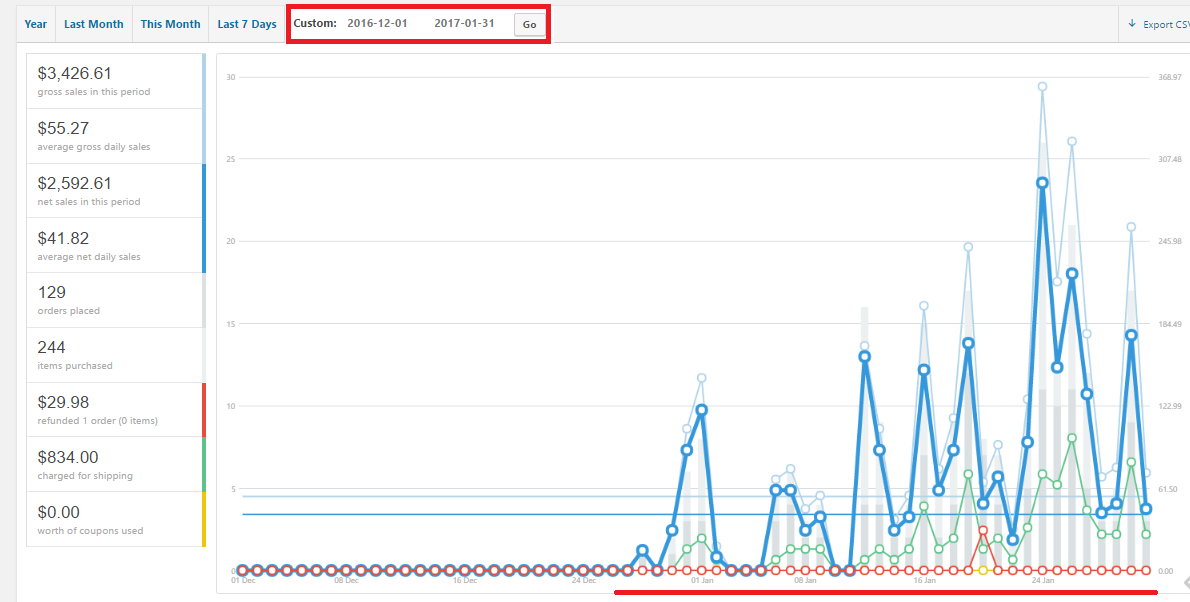
In only 1 month, our client was able to see a lift of $3,426.62 in online sales (from zero before).
4. Traffic ads
Traffic ads are great to run when you’d like to send people to a website or landing page you’ve created.
Similar to reach/brand awareness ads, these aren’t necessarily good for when you’re selling something, such as a product or service.
Instead, these are best for the call to action of “learn more,” so you can drive more people to your website or…
…landing page to get more information on what your ad is about.
Just like with page like ads, traffic ads require a dedicated advertising budget to run, usually on an ongoing monthly basis.
Again, we recommend a minimum of $150 per month because we’ve seen this as the foundation for a successful traffic campaign.
Remember our good – better – best model: $150 per month (good), $300 per month (better), or $500 per month (best).
The most important Facebook ad metrics for traffic ads include link clicks, cost per link click, link click-through rate, reach, and the relevance score.
Link clicks show intent from the person who has seen the ad.
A link click means they clicked on the ad or clicked on the button to visit the page you’re linking them to, to learn more.
We highly recommend setting goals within this campaign of keeping your cost per link click below $3.
This ensures more link clicks (more traffic to your site) at a lower cost to you, so you’re able to maximize your monthly budget.
Interest-based audience targeting people who match with interests in grants or home improvement.
5. Conversion ads
If you’re an eCommerce business, chances are you’ll want to run conversion ads as soon as possible.
These ads are best for when you’re offering a product or service to people.
And it allows you to track the number of conversions you receive from your social media ads.
On the product side, you can use these ads to drive people to your online store, convert them into a…
…customer, and measure the revenue generated from each person, as well as the average cost per purchase from the ads.
On the service side, you can either have people book an event or appointment on your website.
Have people sign up or complete registration for an event or direct people to a landing page that has a form to fill out.
This form can ask for their basic contact information, or it can have additional questions specific to your business.
When they land and fill out this form, this is called generating a lead.
You now have that person’s contact information, as well as anything else you may have asked for.
This person is interested in your business because they took the time to fill out their information.
You can then reach out to each person via phone or email, in order to sign them up for your service.
As with most of the other ad campaigns we’ve discussed, conversion ads also require a dedicated advertising budget to run.
Typically on an ongoing monthly basis.
Once again, we recommend a minimum of $150 per month because in our experience.
We’ve seen this as the foundation for a successful conversion campaign.
Our good – better – best model comes into play here again: $150 per month (good), $300 per month (better), or $500 per month (best).
With conversion ads, the most important Facebook ad metrics are the actual conversions!
Whether this is a lead for your service or a customer of your product, this metric is by far the most important for this type of campaign.
Some secondary Facebook ad metrics include conversion value and ROAS (return on ad spend)…
…if you’re counting purchase conversions, cost per result, link clicks, cost per link click, link click-through rate, and the relevance score.

Ad Results: 51 Leads at $5.80 per lead using Conversion Ads
6. Lead generation ads
Lead generation ads are best for people who offer a service or want to collect email addresses but…
…don’t yet have a website or landing page to send people to, to fill out a form.
Lead gen ads make it easy by providing a form that pops out to the individual within the Facebook app or browser.
Which also allows for a more comfortable and convenient user experience.
Similar to lead conversion ads, you can customize this form to ask for whatever information you need from the person you’re trying to reach.
As people fill out this form, you generate leads (people interested in your business), and you can reach out to them regarding what you’re advertising.
Just like most of the other ad campaigns we’ve discussed, lead generation ads require a dedicated advertising budget to run.
Typically on an ongoing monthly basis.
We recommend a minimum of $150 per month because we’ve seen this as the foundation for a successful lead generation campaign.
Keep in mind our good – better – best model: $150 per month (good), $300 per month (better), or $500 per month (best).
The most important Facebook ad metrics for lead generation ads are… you’ve guessed it: leads!
Some secondary Facebook ad metrics include the cost per lead, link clicks, cost per link click, link click-through rate, and the relevance score.


We ran different conversion campaigns that prompted people to sign the different online petitions
7. Optimization
Although each objective and type of campaign varies from one another, many have overlapping Facebook ad metrics that are important.
After you’ve identified the primary social media KPIs in your campaign, it is time to optimize your ads!
There are many ways to optimize ads, depending on the objective, but just like how many campaigns have overlapping Facebook ad metrics.
They have some overlapping optimizations as well.
The first way to optimize your campaign is within the targeting.
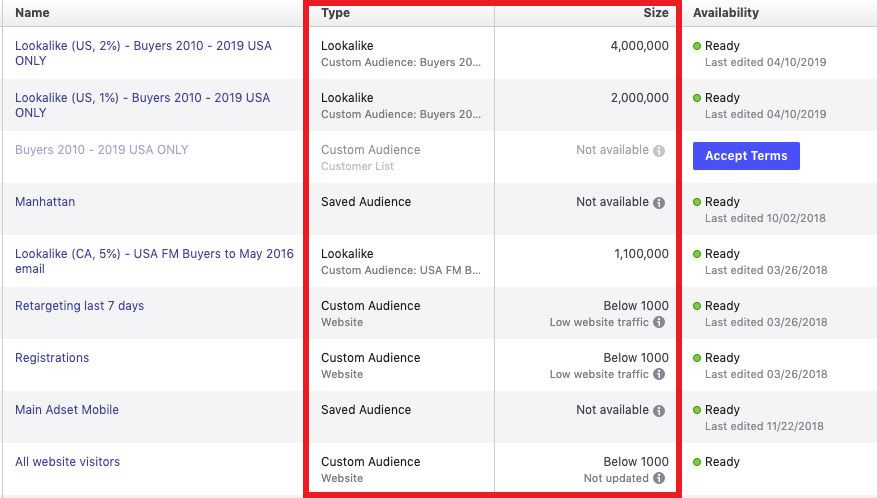
As shown below, Facebook offers a wide variety of options to define your target audience, from basic demographics such as age and location to…
…specific interests and behaviors, such as being in a relationship or having graduated college.
You may have to adjust your targeting several times in order to begin generating results under the primary KPIs we discussed.
Changing the targeting can significantly influence reach, the cost per result, relevance score, and more.
Once your targeting is at its optimal sweet spot, there are a few other optimizations you can make to improve your advertising results.
When you initially launch your ads, you should always perform an A/B split test when possible.
In short, an A/B split test is when you pair different variations of a graphic with different variations of text copy so that each piece of text copy pairs with each graphic.
Our standard at LYFE Marketing is to split test three graphics with three pieces of copy in the beginning.
A great way to optimize your campaign is to heavily monitor all of the ads when you launch them.
Monitor the primary KPIs we discussed, and compare the results thus far to your goals.
After a couple weeks of running the ads, notice the under-performing ads – the ones that have the highest cost or the lowest reach.
Turn these off, so you can reallocate those ad dollars to the top-performing ads instead.
Conclusion
Although we’ve covered a lot in this article and it may feel overwhelming, don’t worry!
Find the section that pertains to the campaign you are currently or would like to be running.
Monitor those important Facebook ad metrics we discussed, and optimize your ads consistently.
If you’d like some assistance with your campaign, that’s what we’re here for!
Let us take the weight off your shoulders and provide some relief, so you can spend your time focusing on building your business.
Feel free to contact us to see what plans that we offer work best for your brand and social media advertising budget.
Other Facebook Advertising Resources
- Top 20 Facebook Ads Agencies In The US 2026
- How To Make Good Facebook Ads That Convert: 5 Best Practices
- 50 Facebook Ad Statistics You Need To Know
- How to Create a Facebook Ad That Captures Attention, Leads & Sales
- 5 Proven Facebook Advertising Tips for Better ROI
- How to Advertise Your Business on Facebook and Actually See Results
- 7 Facebook Ads Best Practices You Need to Implement
- Top 8 Ways to Optimize Your Facebook Advertising Strategy
- 25 Facebook Advertising Statistics That Will Blow Your Mind
- Facebook Sponsored Posts vs. Facebook Ads: Which is Best for Your Business?

