




Social media advertising is a digital marketing strategy that uses paid ads to reach a specific audience on social platforms. You can use these ads to reach your target audience, increase your brand awareness, and drive sales.
Social media advertising is a paid approach where businesses use part of their budget to run ads on social platforms like Facebook, Instagram, or TikTok. These ads can be tailored to reach a specific audience segment.
Social media now offers advanced tools and features designed to improve the user experience, and advertising on social media has also advanced. You can use social data to reach a highly relevant audience.
Social media advertising wasn’t always as advanced as it is today. The roots of social media can be traced to early communication systems like Morse code and later ARPANET, a network at the U.S. Department of Defense that connected scientists at universities for data sharing.
The first social network, Six Degrees, was launched in 1997. You could use it to create a profile and connect with other users online. LiveJournal, Friendster, and Myspace were also launched later, following the same concept.
The real start of social media advertising began with Facebook. The platform was launched by Mark Zuckerberg in 2004, but it was limited to university students at first.
Facebook first sold “Flyers” to help cover server costs. This ad space allowed students and local businesses to promote offers on university campuses. In 2005, bigger companies were interested in the ad space, but Facebook officially launched its Ads Platform in 2007.
Facebook ads had three parts at the start:
- Pages for businesses to create profiles and connect with users.
- Social ads to promote brand messages.
- Insights tool to track user behavior.
Over 100,000 pages were created by global brands at launch, which included organizations, local businesses, and bands. Later, Facebook Ads added better targeting, sponsored stories, mobile app ads, Messenger chatbots, and more formats to improve the effectiveness of advertising.
After the growth of Facebook ads, other followers also followed. YouTube introduced ads in 2007 and dominated online video advertising in the next decade. But Facebook Ads set the standard for social media, that platforms will make money by selling targeted ads to businesses.
Social media platforms have their own ad managers for running and tracking campaigns. The details differ, but the core steps to set up an advertising campaign are similar.
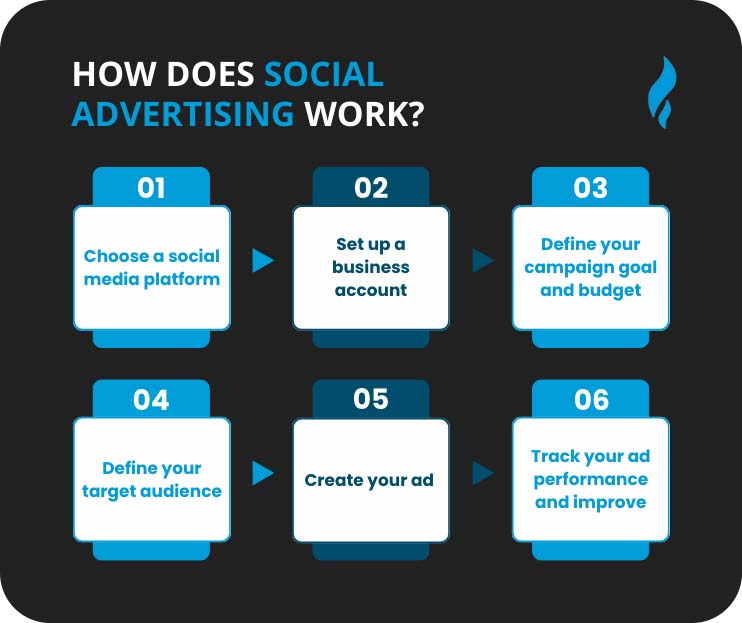
- You have to choose a social media platform to advertise on based on your target audience, budget, and the type of content you plan to promote.
- You have to set up a business account on the chosen platform and review the campaign options like ad formats (video, image, carousel) and placement within the feed.
- Define your campaign goal and allocate a budget for the campaign.
- You should also define your target audience based on demographics like gender, job title, age, interests, and more.
- Create your ad and upload it. You can create an ad with a simple headline and an image or a more detailed interactive video. The social advertising platform shows your ads to users based on the chosen settings. It uses cookies and other data to show it to the right audience.
- You can track the ad performance in the ad manager of the platform and review views, clicks, and engagement.
The social media campaign setup is similar across platforms, but each network has unique rules and guidelines that you need to understand. The next section covers social media etiquette for different social advertising networks.
Meta Ads (Facebook Ads & Instagram Ads)
Meta leads the social media advertising space because Facebook has over 3 billion active users, and Instagram has around 2.3 billion. You can use Meta ads to reach a large audience base of Facebook.
The best part is that Facebook ads give you the option to segment your target audience based on demographics and interests. You also have multiple ad formats, and each one has a specific use. For example:
- Carousel Ads feature multiple images, with their own description, link, and headline. You can use them to highlight different products in one ad.
- Video and Image Ads are simple to set up and appear in user feeds. You can use them to build brand awareness or share your message.
- Collection ads can help you provide an in-app shopping experience. Users can browse product catalogs and buy directly without leaving Facebook.
Instagram was just a photo-sharing platform at first, but you can now use it for social media advertising. It is one of the best social media advertising platforms to promote visual content. 61% of Instagram users are aged between 18 and 34, so if you want to target that demographic, use Instagram ads.
Instagram ads will cost more than other platforms, but you will see a higher engagement. For example, Instagram ads get 23% higher engagement than Facebook ads.
TikTok Ads
TikTok is a newer social media platform, but it has grown into a major advertising channel. It is the best platform if you want to target a younger audience demographic like Gen Z (aged between 14 and 25).
TikTok provides different ad formats and focuses on creativity and authenticity. Here are some TikTok ad formats you can use:
- In-feed Ads blend in with regular TikTok content as users scroll to provide a nonintrusive experience.
- TopView Ads appear immediately when users open the TikTok app.
- Promoted Hashtag challenges invite users to join contests and post their own content. You can use them to engage your target audience.
- Branded Effects, like stickers, filters, and animations. You can add to TikTok videos to drive engagement.
TikTok ads are cost-effective, and the best part is that you don’t require a big ad spend for TikTok. You should use user-generated content on TikTok for the best results.
Social Advertising On Other Platforms
LinkedIn Ads
LinkedIn is the most trusted social media platform by businesses. You can use LinkedIn ads to promote your business to stakeholders, industry experts, and professionals.
There are 4 types of LinkedIn ads, including sponsored content, text ads, sponsored messaging, and dynamic ads. You have to define your ad objective and select the type that supports your objective.
Pinterest Ads
Pinterest is a social platform built for discovery. Online users use Pinterest to search for products and inspiration. This is why Pinterest ads are highly effective for eCommerce businesses. You can use the platform for social selling to drive sales.
X (Twitter) Ads
X (Twitter) faced some uncertainties due to the recent ownership change, but still, X (Twitter) ads are highly effective for your business. You can use them to achieve specific goals, like increasing your reach with ad placement alongside trending topics.
You can use social media advertising as a key strategy to grow your brand, drive sales, or increase your brand recognition. Here are some advantages of social media advertising:
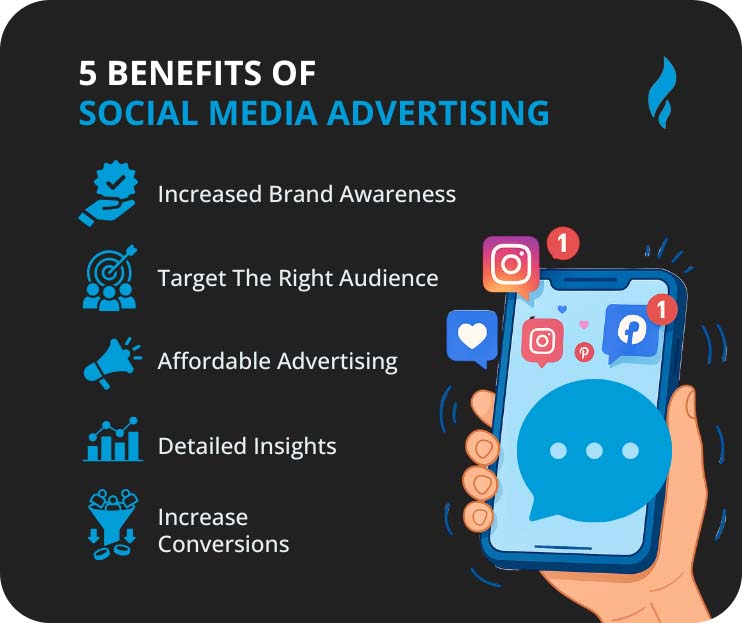
Increased Brand Awareness: You can use social media ads to reach billions of social media users daily and introduce your brand to new potential customers.
Target The Right Audience: Connect with your customers with advanced targeting options. You can increase your social media ROI by reaching an audience that is genuinely interested in your brand.
Affordable Advertising: Social media ads cost less than traditional advertising options, and you can generate results even with a small social media budget.
Detailed Insights: You can use social media analytics to view your ad performance and understand customer behaviors and preferences
Increase Conversions: Use retargeting ads for users who visited your website but did not convert. When you re-engage them with personalized ads, your social media sales will increase.
Our social media advertising agency has helped 4,079 businesses grow through social media advertising services, generating $304 million in revenue. If you want similar results, partner with LYFE Marketing and contact us today at 404-596-7925 to schedule your free consultation.
What is social media advertising?
Social media advertising is a paid approach where you use your marketing budget to run ads on social platforms. You can tailor these ads to reach a specific audience segment.
How much does social media advertising cost?
Social media advertising costs between $650-$2500 a month or $20–$200 per day, depending on your business goals, budget, and the platform you choose for advertising.
What is the social process of advertising?
The social process of advertising involves using marketing principles to interact with and persuade your audience to change or maintain behaviors, either for a commercial purpose like selling products or for a social good.
What is social advertising with example?
Social media advertising is a digital marketing strategy that uses paid ads to reach a specific audience on social platforms. These ads use targeted messaging to reach the right audience and drive engagement. A social media advertising example is the “Rookie Mistakes” campaign by Snickers.
Why is social media advertising important?
Social media advertising is important because you can use it to increase your brand awareness and reach a target audience to increase engagement & conversions with personalized messaging.
How effective is advertising on social media?
Advertising on social media is highly effective. You can use social media advertising to increase your brand exposure, traffic, leads, and sales. The best part is that advertising on social media is cost-effective and generates measurable results for your business.
How does paid social advertising work?
In paid social advertising, you pay a social media platform to show your ads to a chosen audience. The platform targets people based on demographics like age, location, interests, and behavior. You pay the platform through a PPC (pay-per-click) or CPM (pay-per-impression) model.
How does social media payment work?
Social media payments work through two methods: you pay platforms to show ads to users (paid social advertising), and creators earn revenue from your business via influencer partnerships and brand deals.

