



You can measure your social media ROI to see how your strategy supports business goals. But that requires the right tools and reports. We have the best social media ROI content to help you understand and track social ROI.
Social media ROI seems unclear with vague metrics like engagement and impressions. But you can measure the value and impact of your social media efforts.
This can help you show decision-makers the importance of social media in business and convince them to invest more in social media marketing.
You can make the most out of your social media budget with a clear ROI and also move forward in your career as a social media expert. Our guide will show you how to measure ROI based on the social media presence of your brand.
ROI stands for return on investment. Social media ROI is the value you get in return for your social media advertising and marketing efforts.
Simply put, it is the result you get compared to the cost of social media marketing. You can use it to determine if your social media strategy is generating positive results.
You need to show social media ROI to ask for a social media expert team and the resources you need. But showing that impact isn’t always easy.
Social media takes time and consistency to drive results. To keep momentum, you need to show your leadership clear numbers in terms of revenue. You can use metrics like CPA (cost per action), earned media value, and the cost of not being active on social to show the financial impact of your work.
Best brands on social media connect social media to ROI to figure out growth opportunities.
An ROI calculator measures the value of your publishing efforts. But you also need to measure the impact of your listening, engagement, customer care, and analytics.
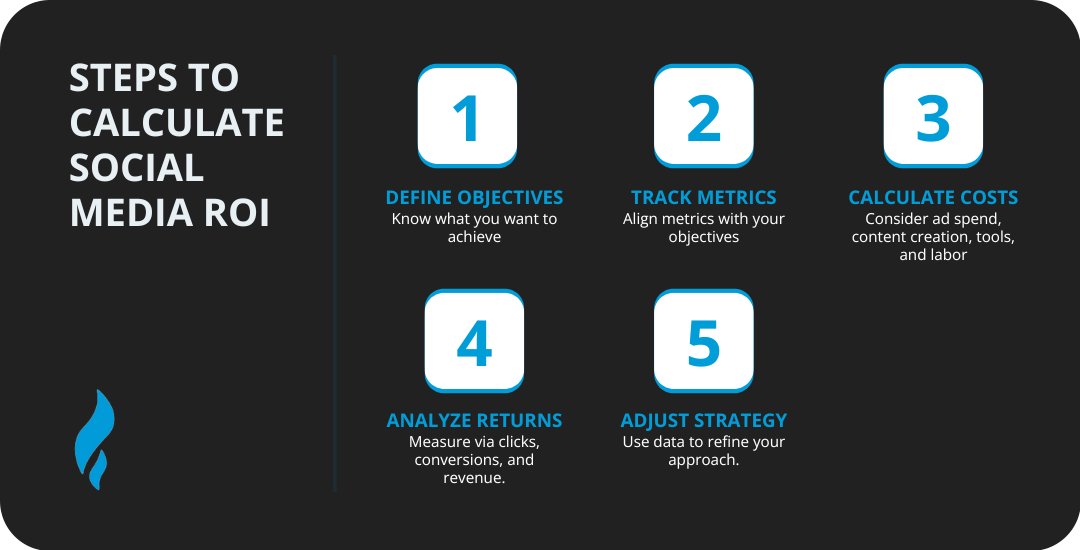
While there isn’t a calculator for that, you can measure it using this ROI formula:
Social media ROI = ((Your Earnings – SMM Costs) ÷ SMM Costs) x 100
In this ROI formula:
- SMM Costs = Total expenses of content production, ad spend, working hours, etc.
- Your Earnings = Revenue generated from your social media campaign
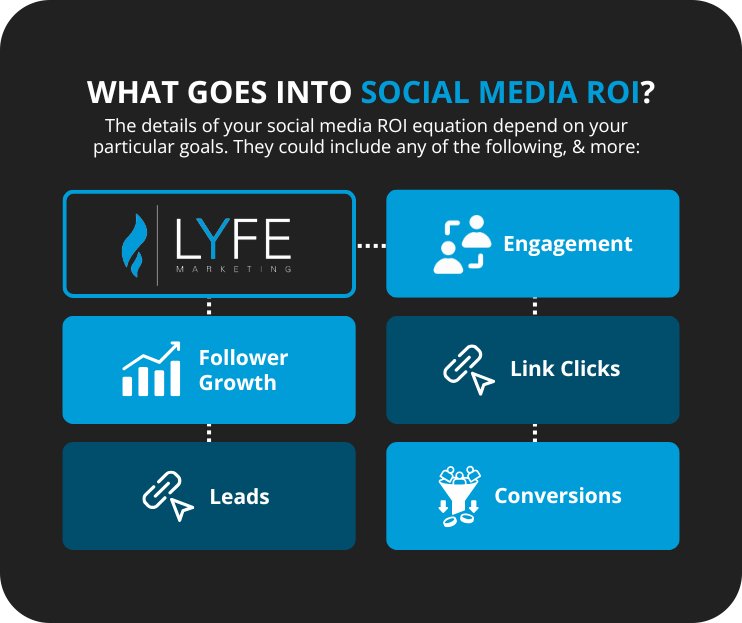
A positive ROI means you are in profit. Here is a breakdown of the different factors that go into your social media ROI:
Define Social Media Goals For Your Brand
Social media ROI isn’t just about revenue, and it’s not the same for every business. Sales matter, but goals like brand awareness are also reasons to invest in social media for some businesses.
You can use social media to generate leads and provide customer support, but multiple goals make calculating ROI complex. This is why understanding your social media goals is important for measuring ROI.

You should ask yourself:
- What are your goals for next year or quarter, and how does social media marketing help to achieve them?
- What do you want to accomplish from your social media efforts? Is it brand awareness, engagement, or lead generation?
- What campaigns, brand launches, and initiatives are your priority on social?
You have to align your goals with your business priorities and vision of your leadership to remove internal roadblocks when proving ROI.
Set Your Campaign-specific Goals
You need detailed insights to calculate ROI accurately. Sometimes, built-in social platform insights are too broad to be useful for stakeholders outside the social team.
Social media campaigns are focused efforts with clear goals and measurable results. So you have to take into account the perspective before measuring ROI. Here are some social media campaign goals:
- Purchases
- Free trials
- Email list and newsletter sign-ups
- Contact form submissions
- Whitepaper or ebook downloads
Once you’ve set your campaign goal, use UTM tracking to keep your data accurate and consistent. UTMs help you track results by campaign and connect them directly to revenue in your reports.
Map Your Goals To Social Media ROI Metrics
Social media teams track output, but business owners and leaders want measurable results. You should align your goals with metrics that prove ROI to show clear results.
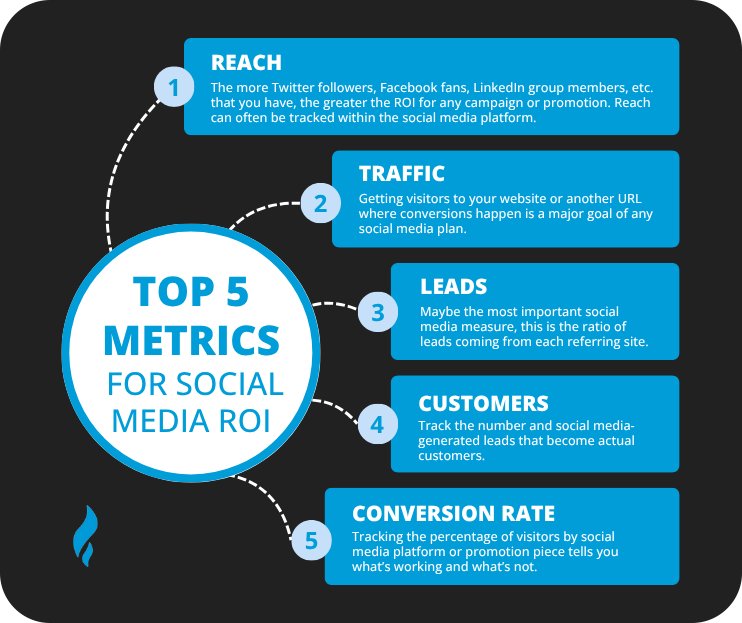
Speak in terms your leadership understands and map your goals to metrics that show return. Here are some metrics to prove ROI:
Track Revenue Attribution Metrics From Social Media
You can directly measure revenue from social media. While it takes time, the results can be significant. Multi-touch attribution shows how social media supports the entire customer journey from pipeline and sales to customer lifetime value.
Track Social-driven Conversions Metrics
Social media impacts buyers at every stage of the sales funnel. You should track down-funnel metrics like CTR (click-through-rate), ROAS (return on ad spend). These numbers connect your efforts to real business results.
Track Owned Media Value Metrics
Calculate what it would cost to get the same results through paid channels. This will show the value of your organic and influencer efforts and show if they are cost-effective or not.
Identify Your Main Data Sources
Your social media management tools should be integrated with tracking tools to track customer activity and measure the impact of your social media efforts through the customer journey. You can’t see the full picture without this connection.
Locating your key ROI metrics like:
- Your social media management (SMM) tool
- Your customer relationship management (CRM) tool
- Your employee advocacy tool
- Your Google Analytics insights
Work with your marketing analytics team to integrate these tools and build a reporting setup for actionable insights to prove ROI and guide decisions.
Track Your Social Media Costs
You have to track all your social media costs to determine if your social media campaigns are generating positive ROI. Online advertising costs are not all your spending, so make sure to consider all your expenses.
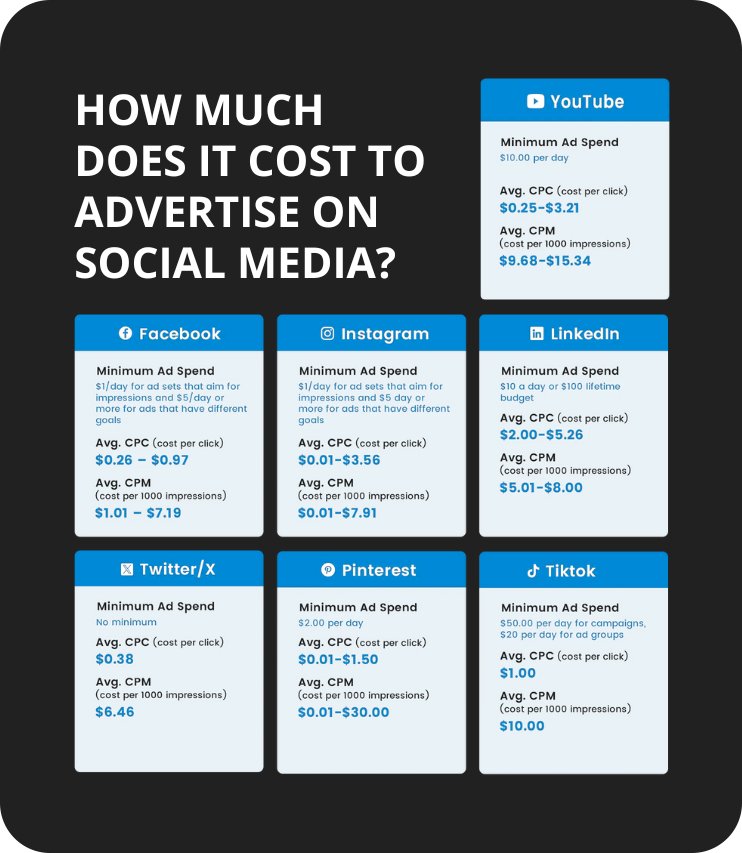
Here is everything you need to include in your expenses for ROI calculations:
Time
Your time has value, so track the hours spent on each social media campaign. Social media experts handle multiple projects, so don’t rely on annual salaries. Use this social media time tracker to measure time spent on each task.
Content
If you have a copywriter, content creator, or influencer working for you, include their working costs. And if you write content yourself, count the time as part of your investment.
Social Media Tools
Social media management tools will come with costs. Include these costs in your ROI calculations based on your campaign length. For example, for a one-month campaign, you can add the monthly cost of the software in your social ROI calculation.
Include any money spent promoting your posts or boosting social media ads. You can track these through your ad budget.
Once you’ve added up all your expenses, use the social media ROI formula to calculate the return for each campaign.
Socialize Your ROI Story With Company Leadership
Your social media reports should show how your social media efforts support business goals. Set a reporting schedule that fits your goals and share updates with leadership so they’ll better understand your value.
Here are some tips that will help you improve your social media marketing ROI:
Optimize Your Social Posting
Social feeds refresh every second, and your content can get buried fast. If your audience doesn’t see or engage with your posts, you won’t get any return on your efforts. Follow the best time to post on social media, and if you can post multiple times a day.

The 2025 Content Benchmarks Report shows the average brand posts 9.5 times per day across all platforms. But don’t rely on averages and find the frequency that works best for your brand.
Posting more often improves visibility and shows your audience you’re active and worth following. Brands that rarely post are easy to forget. Use the best social media schedulers to automate your posts at the best times for your audience.
Improve Your Engagement Metrics
Engagement is the first step toward conversion. If someone interacts with your post, they’re more likely to purchase than someone who scrolls past. You need a higher engagement rate to increase your social media ROI.
This can be done with a compelling copy, posting at the right times, and using eye-catching visuals to hook your audience.
Focus on creating content your audience can relate to. Use analytics tools to track post-level engagement and see what works best with your target audience. And use those insights to shape your content strategy.
Gather Your Social Data
Measuring social media ROI comes down to your social media metrics. Review your social media dashboards and Google Analytics to get a clear view of your performance.
Note the best-performing content and your peak engagement times. This can help you improve your organic and paid social media campaigns.
The more data you have, the easier it is to increase your reach and improve ROI. This will identify what resonates with your audience and help you create successful social media campaigns.
Run Test Campaigns In Doubt
You will run multiple paid and organic campaigns but not all will succeed. But you can save time and money by testing a campaign or ad type before fully committing to it.
This is helpful when using social media for marketing because if you’re not careful you will drain all your social media budget. You should run test campaigns to see what works and them scale it.
Use Social Commerce
Social commerce allow you to easy to move from product research to purchase on social platforms. Consumers search for new products on social media when planning to buy within the next month.
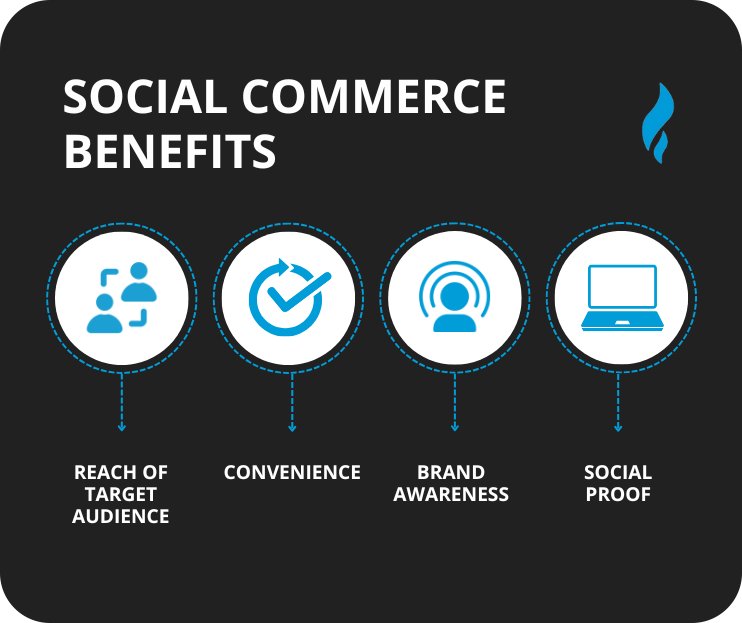
Selling on social media makes it easier to link engagement to sales and show ROI. Learn how to increase sales on social media to improve your ROI.
Partner With Influencers To Increase Your Reach
Consumers rely more on influencers than your website for product reviews before buying. Nearly half of consumers buy each month because of influencer posts. And 86% of customers make at least one purchase a year based on influencer recommendations.
Strategic influencer partnerships can boost down-funnel conversions and increase social media ROI. Nano-influencers with niche audiences are a cost-effective way to reach loyal, engaged customers.
Use Tools To Quantify Impact
Your marketing tech stack is key to measuring ROI. It is difficult to measure revenue without proper integrations and linking your social media analytics to revenue. Use tools that work best for your marketing goals.
We use Employee Advocacy, Google Analytics, social media anlytics at LYFE Marketing to track your brand awareness, message effectiveness, and revenue.
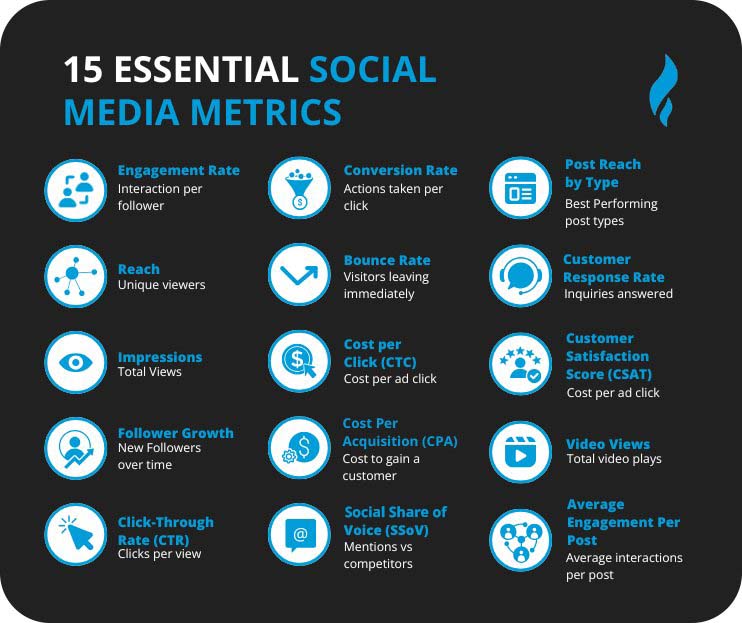
We track metrics that matter the most for your business. This helps us evaluate campaigns and understand what connects with our audience.
Measuring your social media impact shouldn’t be a mystery if you have made it this far in our guide.
Just define and track social ROI to align campaigns with goals and use resources efficiently. If you need our help, hire our social media marketing agency and fill up this contact form today.
What is the ROI of social media?
Social media ROI is the value you get in return for your social media advertising and marketing efforts. It is the result you get compared to the cost of social media marketing.
What is the 70/20/10 rule for social media?
The 70/20/10 rule for social media means: 70% of content is brand-focused, 20% is shared or curated, and 10% is promotional or experimental. It balances engagement and marketing efforts.
What is the 5 5 5 rule on social media?
The 5 5 5 rule on social media says that you have to post 5 times a day, engage with 5 people, and follow 5 new accounts daily to grow your social media presence.
What is the 50/30/20 rule for social media?
The 50/30/20 rule for social media means 50% of your content should educate or entertain, 30% to build community, and 20% to promote products or services
Other Social Media Marketing Resources
- What Are The Different Types Of Social Media Marketing Agencies?
- Top 17 Social Media Marketing Agencies Columbus 2026
- Top 15 Social Media Marketing Agencies Cleveland 2026
- Top 14 Social Media Marketing Agencies In Cincinnati 2026
- Top 14 Social Media Marketing Agencies Huntsville 2026
- Top 14 Social Media Marketing Agencies Birmingham 2026
- Top 11 Social Media Marketing Agencies Montgomery 2026
- What Does A Social Media Marketing Agency Do?
- What Is The 5 3 2 Rule For Social Media?
- What Is The 70 20 10 Rule Of Marketing?

