



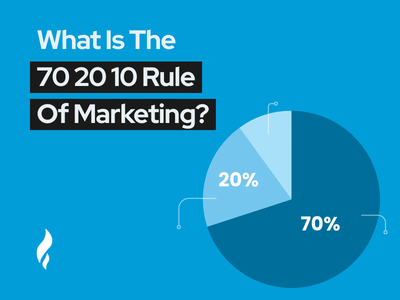
The 70-20-10 rule in marketing is a content and budget allocation strategy that suggests 70% of your content should be value-driven, 20% should focus on emerging trends, and 10% should be experimental or disruptive initiatives.
This strategy prevents stagnation by focusing most resources on what works. You also reserve space for future potential, ensuring a blend of reliability and breakthrough ideas.
How To Use The 70:20:10 Rule As A Marketing Model
New marketing tools and techniques emerge daily, which makes it harder to decide which activities to prioritize for the best return on investment.
The 70 20 10 rule is a useful framework that helps you decide how to allocate time and budget across various marketing activities.
You need to be agile and respond to new developments to stay ahead of competitors. But you should avoid chasing every new tool that can distract from optimizing the social media channels that work and bring results.
The 70/20/10 model is flexible and can be applied across many areas of digital marketing services. This rule is often used for media or campaign budgets, but you can adapt it for strategies like social media marketing and content marketing.
Here are three main areas for allocating digital marketing resources, with tips on applying the 70 20 10 rule. We also explore how the model can support learning and personal development.
The 70 20 10 Rule In Social Media Marketing
When it comes to social media, brands wonder which content to share. The 70/20/10 rule helps you organize posts so your brand looks credible while keeping the target audience engaged.
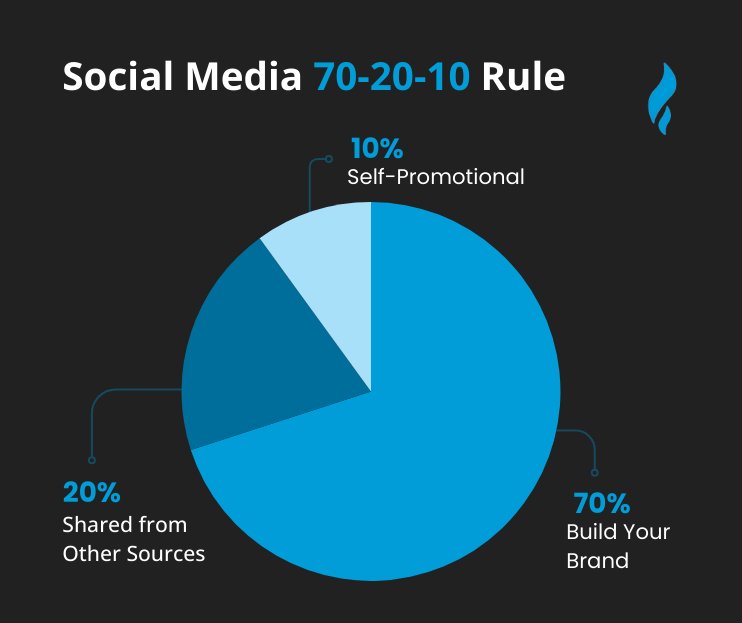
The 70 20 10 rule for social media marketing suggests:
- 70% of your social media posts should provide reliable content that strengthens your brand.
- 20% of your content should feature others, like promoting another business or sharing interesting articles, with proper tags and credits.
- 10% of your posts should include calls to action, such as promotions, discounts, or announcements of new products or services.
You can use this posting mix on various social media platforms like Facebook, Instagram, TikTok, LinkedIn, and more.
The 70 20 10 rule in marketing is highly adaptable. Its strength lies in how you can apply it to different ways of allocating time and resources. This is a guideline for discussion rather than a strict rule.
Business owners can use this rule to dedicate most of their efforts to maintaining or building their brand, and use the remaining resources to connect with consumers on an emotional level.
You can take calculated risks by allocating most of your marketing budget to proven strategies with the remaining portion on new opportunities that could become highly profitable.
The 70 20 10 Rule In Content Marketing
You can apply the 70 20 10 rule to content marketing by dividing your content into the following proportions:
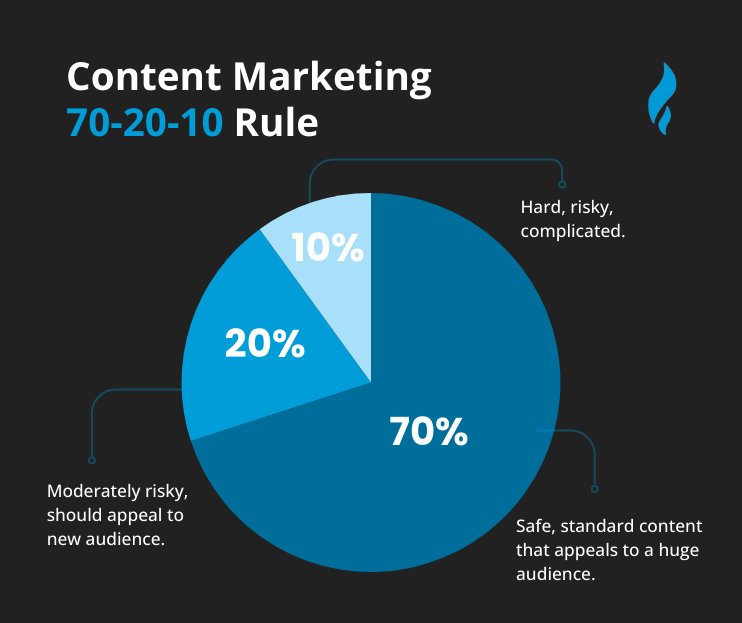
- 70% of your content should be reliable and proven material that strengthens your brand and attracts visitors.
- 20% of your content should be premium, consisting of higher-cost or higher-risk pieces that can reach a broader audience, such as viral TikTok trends.
- 10% of your content should be experimental to test new ideas or formats.
For example, LYFE Marketing suggests using a balanced content mix in your social media marketing strategy so your posts aren’t all the same. This makes sure your audience stays engaged.
We recommend that 50% of your content should inform or educate your audience with useful information. 30% should entertain or engage users with fun or interactive posts.
The remaining 20% should promote your brand or products without overwhelming followers with sales messages.
The 70 20 10 Rule In Digital Media Investment
You will naturally rely on marketing strategies that have proven effective. For example, if Google Ads generates sales at a healthy cost per acquisition, you will invest more in Google Ads.
But relying too heavily on a single strategy or being rigid has caused many established companies and small businesses to struggle. They often find themselves unable to adapt to changing consumer behaviors and marketing trends.
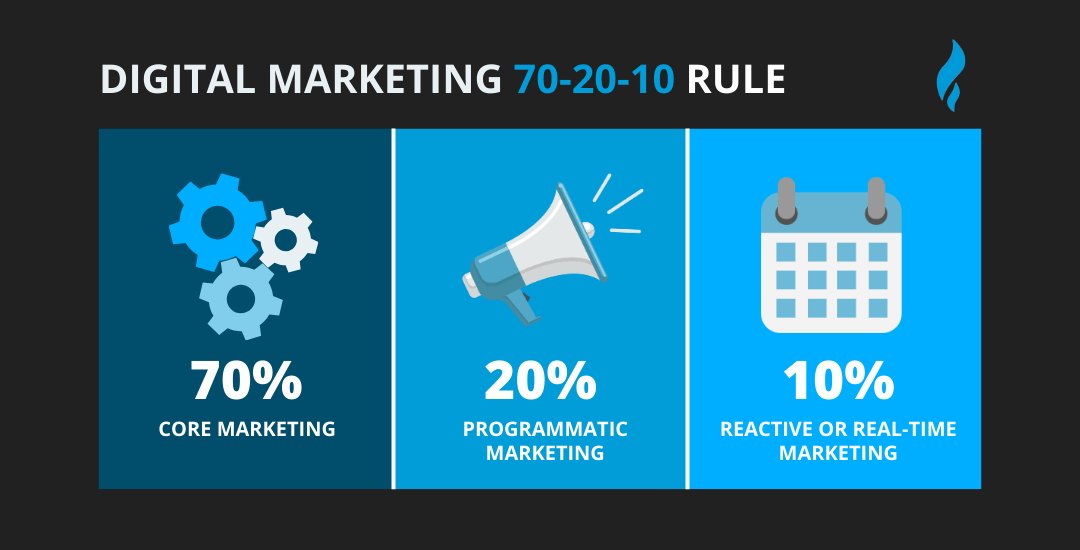
In digital media, 70% of your marketing should focus on marketing as usual. This means prioritizing the channels and tactics that have consistently driven sales in recent years.
For example, if you’re in the retail business, you should stick to search and affiliate marketing. These campaigns are proven to work, and you will have a solid understanding of how to manage them.
This 70% represents the core of your marketing efforts.
20% of your marketing should be programmatic, meaning it is automated and guided by rules to respond to different triggers. This type of marketing is less planned and more machine-driven.
The remaining 10% should be fully reactive and focus on real-time campaigns like Wendy’s quick-witted social media responses.
We recommend dividing marketing spend into 70%, 20%, and 10% buckets. The 70% bucket should focus on building and improving your proven media strategies.
The next 20% to media that are newly popular or emerging. The remaining 10% should target fast-moving opportunities that capture media attention.
This approach can be challenging because it requires the right creative team and processes. But the good thing is that you can work with an expert digital marketing agency like us for the best results.
Limitations Of The 70 20 10 Rule For Marketing
The 70 20 10 rule for marketing has many benefits, but if you’re not a marketing expert, this rule can have the following drawbacks or limitations:
Overlooks Unique Business Needs
The 70:20:10 rule isn’t a one-size-fits-all solution, as every business is unique. If you’re a small business starting out, this rule can guide you in the right direction.
As you collect more data and learn what works for your audience, you should adjust your strategy accordingly.
Established brands can dedicate 70% of their strategy to proven content and only 10% to experimentation. Newer businesses don’t have this advantage and may need to experiment with a larger portion of their content.
Ignores Customer Differences
You will have a diverse target audience that includes different types of customers with varying decision-making styles. Some customers decide quickly, while others need more persuasion. Rigid frameworks like the 70 20 10 rule don’t account for these differences.
Limits Strategic Flexibility
An effective marketing strategy is flexible. Having a plan is important, but it should be adaptable. If you rely overly on the 70:20:10 rule for marketing, it will limit strategic thinking.
You should ask yourself what is the best solution? Rather than how you can fit the 70 20 10 rule in your strategy. If you prioritize the framework over strategy, you stop thinking strategically and let the rules make decisions for you.
Discourages Innovation
If you’re overly rigid with the 70/20/10 framework, it can hinder innovation by limiting creative risk-taking. If only 10% of your efforts are devoted to new ideas, you restrict opportunities for viral trends.
This makes your strategy more risk-averse and reduces the comfort level needed to try new ideas. The framework can create a gatekeeping effect, where ideas labeled innovative or unconventional automatically receive the smallest allocation.
Final Thoughts On The 70:20:10 Rule
Now that you know all about the 70 20 10 rule for marketing, you can make smarter decisions on how to integrate this into your strategy or make the most out of it.
If you need some help getting started with your strategy, the digital marketing experts at LYFE Marketing are here to help. Contact Us Today to get a custom proposal.
The 70 20 10 Rule In Marketing FAQs
What is the 70 20 10 rule in social media marketing?
The 70 20 10 rule in social media marketing suggests that 70% of your content should add value and build your brand, 20% should share others’ content, and 10% should be promotional.
What is the 70-20-10 rule in marketing?
The 70-20-10 rule in marketing is a strategic framework for allocating 70% in proven, low-risk activities. 20% in testing new or emerging tactics; and 10% in high-risk, experimental campaigns.
What is the 3-3-3 rule in sales?
The 3-3-3 rule in sales is a framework designed to boost engagement and conversions by focusing on key timeframes: hooking prospects within 3 seconds, delivering value in 3 minutes, and following up within 3 days.
What is the 50 30 20 rule in marketing?
The 50 30 20 rule in marketing suggests 50% of your posts should be engaging, 30% informative, and 20% promotional. You can use it to balance your content strategy.
What is the 70-20-10 rule in business?
The 70-20-10 rule in business is a strategic framework that suggests 70% of resources go to core business (existing products), 20% to adjacent, and 10% to transformational, disruptive projects.
What is the 7 11 4 rule in marketing?
The 7 11 4 rule is a marketing framework that states to build trust for purchase, a consumer needs 7 hours of interaction, 11 touchpoints, and 4 different locations (platforms).
Other Social Media Marketing Resources
- What Are The Different Types Of Social Media Marketing Agencies?
- Top 17 Social Media Marketing Agencies Columbus 2026
- Top 15 Social Media Marketing Agencies Cleveland 2026
- Top 14 Social Media Marketing Agencies In Cincinnati 2026
- Top 14 Social Media Marketing Agencies Huntsville 2026
- Top 14 Social Media Marketing Agencies Birmingham 2026
- Top 11 Social Media Marketing Agencies Montgomery 2026
- What Does A Social Media Marketing Agency Do?
- What Is The 5 3 2 Rule For Social Media?
- Top 15 Social Media Marketing Agencies Fresno 2026

