



For small businesses to compete, attract clients, and increase sales, marketing is essential. But a lot of business owners are not sure how much they should spend on marketing.
To create a budget that works for your small business, you can take the following actions:
- Research Your Industry
- Set Clear Goals
- Consider All Your Potential Costs
- Track Costs And Adjust Regularly
The Average Marketing Cost For A Small Business
The average marketing cost for a small business is around 5–10% of your revenue. But the exact marketing budget depends on your business type, goals, and revenue.
4 Things To Consider When Calculating Marketing Cost For A Small Business
Here is a detailed breakdown of what affects your marketing budget:
1. Research Your Industry
A simple way to set your marketing budget is to base it on your revenue, but that varies with your industry.
- B2B small businesses spend 2–5% of their revenue on marketing.
- B2C small businesses have to spare 5–10% of their revenue for marketing because they have to market on multiple platforms to reach customer segments.
If you’re unsure of how much to spend on marketing, it’s a good idea to look at what your competitors and the industry as a whole spend.
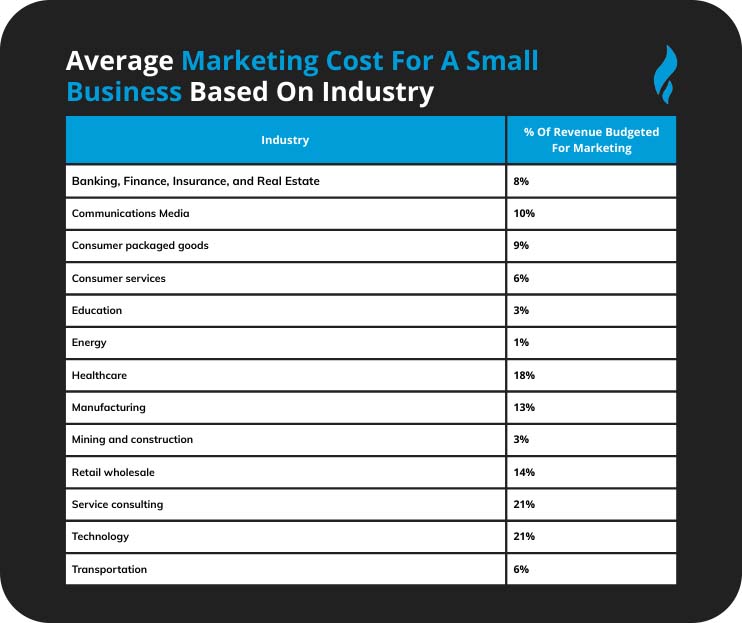
About 15% of small businesses in the US spend more than $50,000 annually on marketing, with the average spending falling between $10,000 and $50,000. You should be aware of the following statistics:
62% of small businesses in the US with 0–10 employees spend under $5,000 a year on marketing. 58% of small businesses prioritize social media marketing as their top channel, 52% focus on email marketing, and 39% use Google Ads.
2. Set Clear Goals
You should have clear and measurable marketing goals.
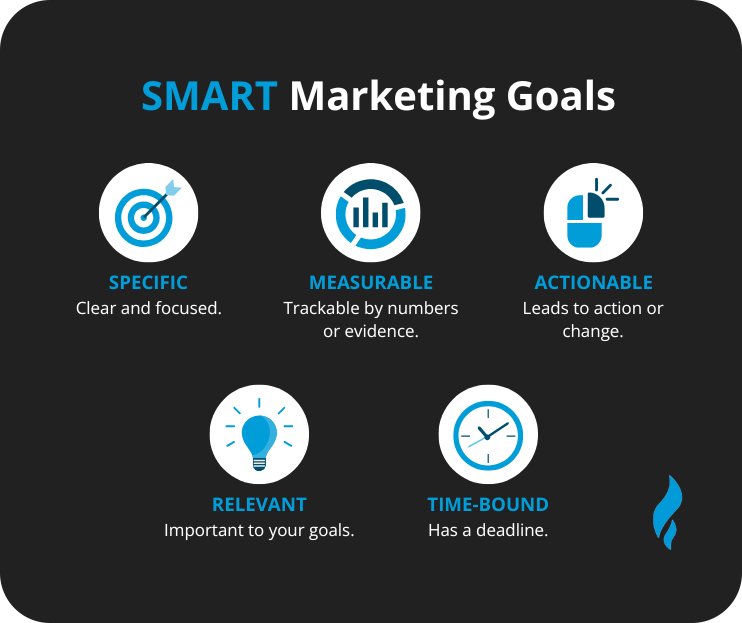
Here is how you can set measurable goals:
- Do you want more website visitors and to complete a specific action?
- Which customers are most important, and how many do you want to attract?
- Decide on the numbers and timeline for your goals.
Setting clear goals can help you plan the steps you need to take and the budget required. Consider your customer segments, the types of people you want to reach, and what they need.
Make sure your value proposition clearly shows how you meet your customers’ needs and why they should visit your site or store. Then you can plan marketing campaigns that offer solutions likely to drive sales.
3. Consider All Your Potential Costs
Marketing has several parts, and your budget should reflect that. We suggest dividing your marketing budget into key categories and adjusting the amounts over time based on what works best.
Website: Your website costs cover design, development, and monthly hosting. It also includes updating content to keep it current. Make sure your site has analytics so you can see who visits and where they come from to measure the impact of your other marketing efforts.
Social Media: Set aside money for social media ads on platforms that are relevant to your company. Also, budget for the time and resources you need to create that content, even if you only rely on organic traffic.
Online Advertising: For search ads like Google Ads, start with at least $1,000 a month to see results. As you track and adjust your campaigns, you can fine-tune your budget.
Traditional Media: Radio, print, and TV ads can still be effective depending on your audience. Compare your options and focus on getting the most value from your budget.
E-newsletters: Regular updates to clients who opt in keep your business visible and encourage repeat sales. Creating, planning, and sending these emails takes both time and resources.
Video: Small businesses should use video to promote their brand. Costs include hiring a camera crew and editor, or upgrading your smartphone to shoot videos yourself.
Training: If your staff handles marketing, you should budget for training. Marketing channels change constantly, and your staff needs training to stay effective.
4. Track Costs And Adjust Regularly
As you plan your marketing budget, you’ll see what drives ROI. You should track your spending and analytics regularly to measure results. Also, review your marketing budget every quarter to compare your projections with actual spending.
Tracking costs and adjusting your strategy will help you create more accurate budgets over time.
Take Your Next Step
Take your next step as a small business and hire a small business marketing agency like LYFE Marketing to help you with your marketing. Their experts can optimize your marketing spend and make the most out of your budget. Contact us today to schedule your free consultation.
Small Business Marketing Agency FAQS
What is the 3-3-3 rule in marketing?
The 3-3-3 rule in marketing means focusing on 3 key messages, targeting 3 audience segments, and using 3 primary marketing channels to share your content.
What is a good marketing budget for a small business?
A good marketing budget for a small business is typically 5% to 10% of its gross revenue to maintain and grow the brand. But if you want rapid growth, 10% to 20% of revenue is a good marketing budget.
What is the 70 20 10 rule for marketing budget?
The 70 20 10 rule for marketing budget is a framework that allocates 70% of resources to proven marketing channels for consistent ROI, 20% to emerging or growth-oriented initiatives, and 10% to experimental, high-risk projects.
What is the 70/30 rule in marketing?
The 70/30 rule in marketing means that 70% of your content should focus on providing value, while only 30% should directly promote your product or service. This approach builds trust and prevents your marketing from feeling too sales-focused.
Other Small Business Digital Marketing Resources
- What Is The Meaning Of Marketing Services?
- What Is The 3 3 3 Rule In Marketing?
- Why Digital Marketing is the Key to Success for Your Business
- Why the Role of Digital Marketing is Vital to Your Business Growth
- Digital Marketing Best Practices That Lead to Small Business Success
- The Importance of Digital Marketing: Top 10 Reasons You Need It
- What Are The 7 Types Of Digital Marketing Services?
- Top 10 Benefits of Digital Marketing & Why Digital Marketing is a Must for Every Small Business
- 7 Ways of Digital Marketing Best for Driving More Sales
- What is Digital Marketing? Here’s Everything You Need to Know
Other Small Business Marketing Resources
- What Is The 1% Rule In Marketing?
- What Is The 3 3 3 Rule In Marketing?
- 25 Tips for Small Business Marketing On Facebook
- 30 Small Business Marketing Tools
- Top 20 Small Business Marketing Strategies to Drive More Traffic & Customers
- 25 Small Business Marketing Ideas to Help Grow Your Business
- How Marketers are Succeeding at Using Instagram for Small Businesses
- 10 Proven SMB Marketing Strategies That Will Work For You
- Small Business Website Design: A Guide on How to Get Started
- Marketing 101: The Basics of Marketing for Small Businesses

