



You want to improve your social media presence with engaging content. Effective social media content can drive traffic and sales. But if you’re unsure what to post, don’t worry, we will explain social media best practices and simplify social media marketing.
We will show you what makes a great social media post, content ideas, and tips for different social media platforms.
- Understand Your Post Anatomy
- How To Make A Perfect Social Media Post
- Find And Repurpose Existing Content
- Know Your Social Media Platform
- What Should You Publish On Social Media?
- Publish At The Right Time
Understand Your Post Anatomy
Not all posts are effective. You have to understand each part of a social media post to create content that actually works. Here are different elements of a social media post you should know:
- Caption: Describe your post or grab the attention of the audience with a headline or a question. Your captions should be around 15 words (approx. 150 characters) to get clicks on social media.
- Call to action (CTA): Ask a question to increase social media engagement. Encourage users to try out or purchase.
- Emoji: Use relevant emojis to add tone and visual appeal.
- Hashtags: Use relevant keywords to increase your reach. For platform-specific tips, see Know Your Social Media Platform.
- Mentions: Tag your account or others present in your post to increase your visibility and reach.
- Images or Videos: Add high-quality photos, videos, or graphics that align with your brand and appeal to your audience. You should also adjust the quantity based on the platform.
There’s no single formula for a perfect social media post. But you can use these proven tips to reach your social media goals. Here are some key elements to grow your audience and increase engagement.
Captions And Headlines
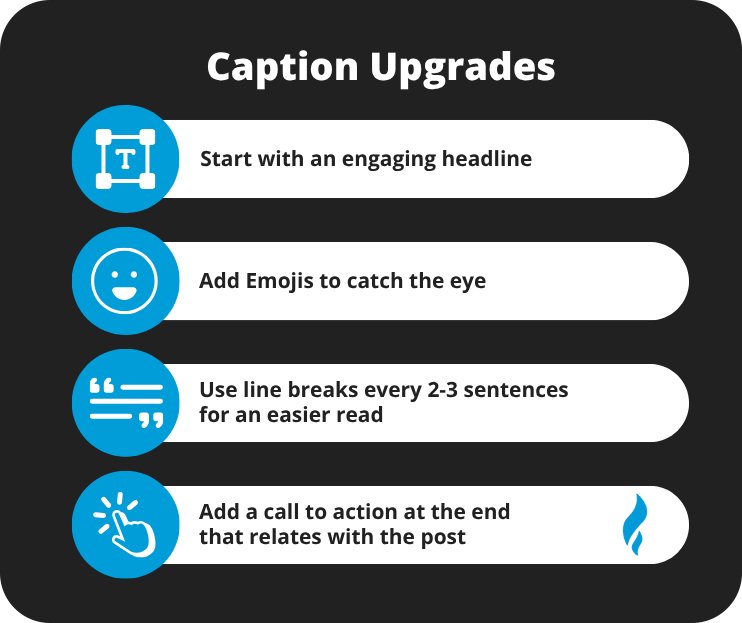
You can add a full-length caption to your post to provide context about your post. Short headlines can help you hook the audience, and you can use a secondary headline to add more information in a limited space.
| Platform | TikTok | X (Twitter) | |||
|---|---|---|---|---|---|
| Ideal Caption Length | 40-80 characters | 100-125 characters | Under 100 characters | 150-300 characters | 71-100 characters |
| Post frequency | 2 per day | 3-5 per week | Up to 4 per day | Up to 5 per day | 2 per day |
| Hashtags | Max. 2 | 3-5 | 2-3 | Max. 2 | Max. 2 |
Best Practices And Tips For Captions
Your text should grab the attention of the audience while staying clear. Strong headlines do one or more of the following:
- Highlight a clear benefit
- Address the pain points of your audience
- Create a sense of urgency or a fear of missing out (FOMO)
- Use stats, numbers, and strong words like: “Top 10 or stats”
- Ask a question
- Spark curiosity with new or surprising information
You should check how your text and visuals appear on each platform and adjust for best social media optimization. Keep your headlines or captions between 10–20 words (about 138–150 characters), but this can change based on the platform you post on.
Emoji And Special Characters
Use emojis and special characters to grab the attention of your audience and make your brand relatable. Emojis add personality and emotion to your brand to increase engagement.
You should use emojis sparingly, but only if they add value to your post. They break text to improve readability or collect audience votes, like thumbs up for yes and thumbs down for no.
Best Practices And Tips For Using Emojis
- You should understand the meaning of emojis before using them. Misusing emojis can lead to social media fails for brands. You can check emoji definitions on Emojipedia.
- Use simple emojis because designs vary across platforms. So the same emoji can look different and confuse your audience.
- Use emojis to represent your diverse audience and be inclusive.
If emojis feel risky for your brand, you can use simple symbols. You have the following options:
- Arrows or pointing fingers direct attention to links
- Stars highlight excitement or important text
- Check marks show action or approval
- Colored symbols emphasize key points
Mentions
You should tag contributors, influencers, or businesses present in your post to encourage reshares. Tags increase reach for both you and the tagged person and push your content in the social media algorithms.
Best Practices And Tips For Mentions
- Mention people or brands relevant to your business who will value the shoutout.
- You can tag people and non-competitor brands who share your goals or target audience. But don’t over-tag to avoid spam.
Hashtags
Hashtags are words or phrases with a # sign that label content, themes, social media trends, or brands. You can make your post searchable right after publishing using hashtags.
Hashtags also increase visibility and connect your brand to trending topics with clickable links that lead to a page displaying all posts using the same tag.
| Hashtag Type | Examples |
|---|---|
| Product or Service | #EcoBackpack, #CraftCoffee |
| Daily | #ThrowbackThursday, #FridayVibes |
| Location | #NYCFoodies, #AustinStartups |
| Social Responsibility | #CleanOceans, #ClimateAction |
| Brand Event or Campaign | #BoostYourBrand, #SummerLaunch2025 |
| Industry or Community | #FreelanceWriters, #DigitalMarketing |
| Acronym | #FOMO, #OOTD |
| Event, Holiday, Season | #EarthDay2025, #CyberMondayDeals |
| Niche | #TechReviewers, #MarketingAgency |
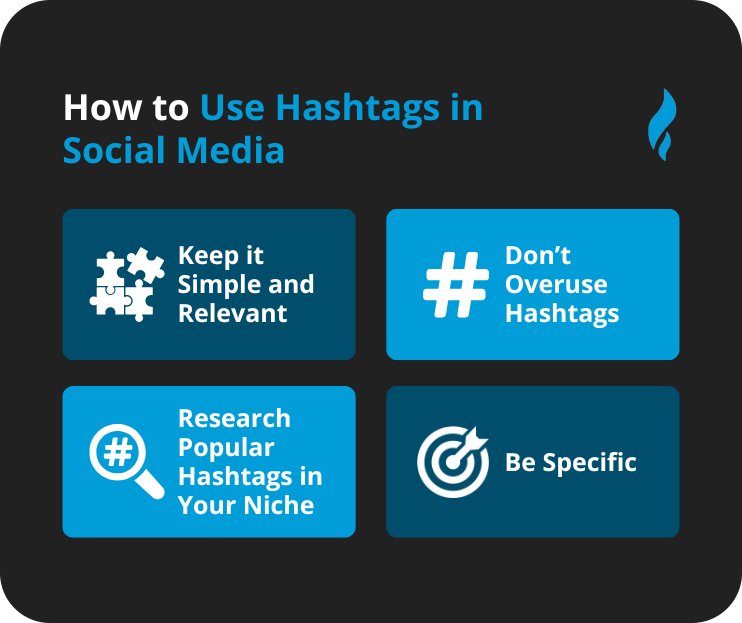
Best Practices And Tips For Hashtags
- Check hashtags to understand why they are popular, to avoid linking your brand to something controversial.
- You should use hashtags that accurately reflect your content. Misleading hashtags can cause your audience to leave.
- Keep your hashtags short and catchy. Don’t use them to write full sentences or thoughts.
- The ideal number of hashtags differs by the social media advertising platforms you are using.
Calls To Action (CTA)
You should include a clear call to action in your post. For example, ask your followers to comment or reshare your content for a discount. Also, link to your website or relevant content.
Visuals
Visual content grabs more attention on social media. Posts with images or videos get more clicks, shares, and comments than text-only posts.
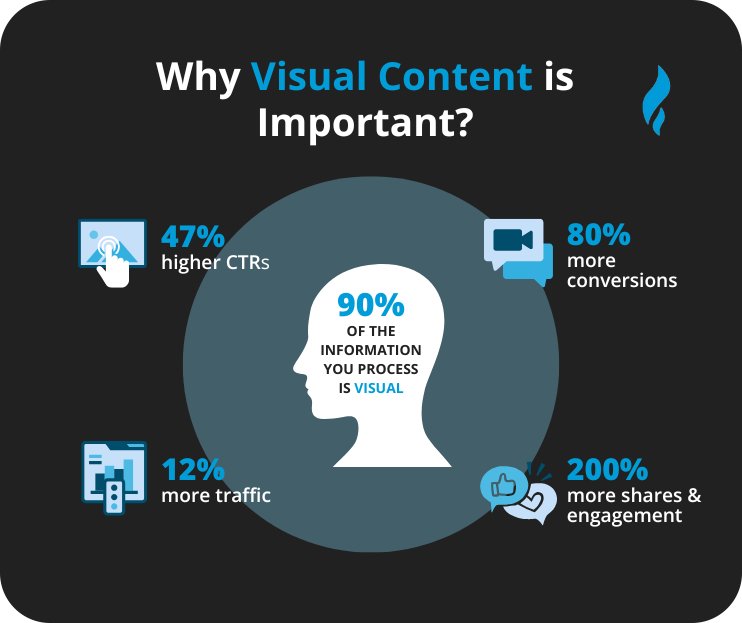
You can use a mix of photos, text-based images, and videos to increase your social media traffic, but you don’t add visuals in every post. Track engagement and adjust your strategy based on results.
Best Practices And Tips For Visuals
- Visuals that have bright colors and sharp details get more attention.
- Add a headline to your image to increase visibility and engagement.
- You should use custom visuals because stock images are generic and don’t reflect your brand.
- Your visuals should be optimized for a specific social platform to avoid upload issues. For example, on Instagram 1:1, 4:5, and 1.91:1 images work best.
- To make your content accessible, add alt text, a brief description of the image.
- Check your images and videos on mobile to make sure they’re clear and correctly aligned.
Find And Repurpose Existing Content
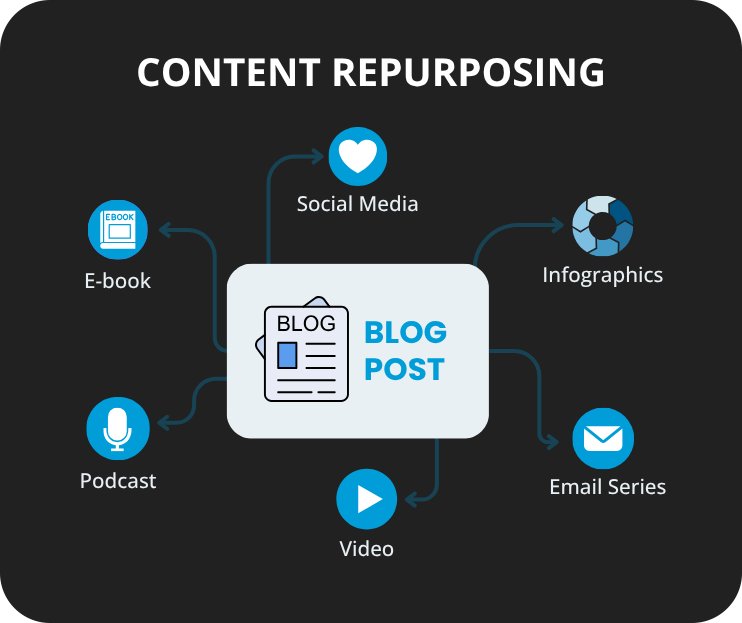
You don’t need to start from scratch every time. Use content from your social media team and other platforms to repurpose or reshare it to keep your audience engaged with your brand.
External Content
You can share external posts to provide value to your audience. This will build trust in your expertise and fill any content gaps.
Best Practices And Tips For Sharing Third-Party Content
- Understand your audience and share content that is genuinely useful and resonates with them.
- You can grow your network and build relationships by sharing content from someone else.
- You should fact-check content and verify facts before you share content.
- Always credit the original source with a link and tag their social account when you share their content
Internal Content
Your organization has valuable content you can reuse for social media, like how-tos, blog posts, press releases, and promotions. You can break long content into short, easy-to-digest posts and share them on social media platforms.
Business owners always ask: Which social media should I use? Your audience uses different social media platforms for different reasons. Create a strategy that resonates with your audience’s behavior on each platform.
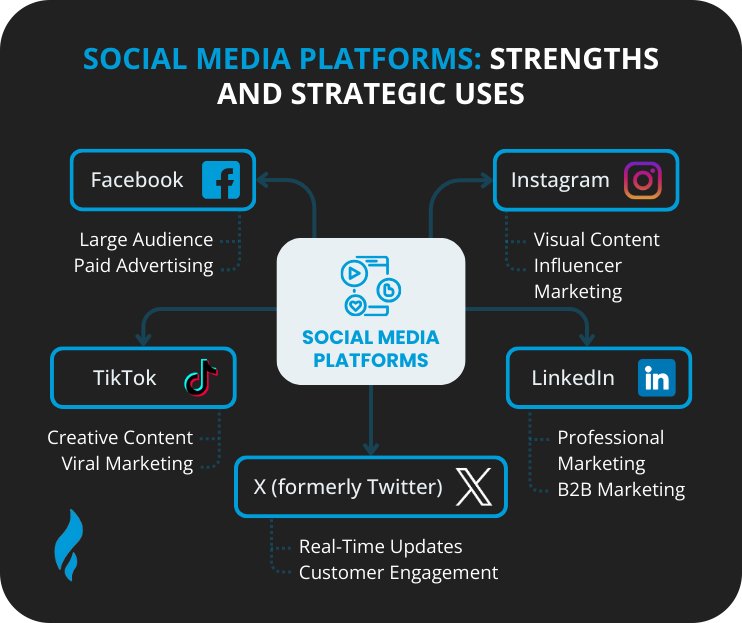
You can learn about a platform with a social media audit. Let’s look at how users use different social platforms, what content keeps them engaged, and social media best practices for each one.
You don’t need to be on every social platform; focus on the ones your audience uses most to reach the right audience and get real results.
Facebook is the largest social media platform that has a diverse user base of over 3 billion. People use Facebook to connect with others, follow news, entertainment, and niche topics.
There is a lot of content on Facebook, and users spend a few seconds on each post and scroll through what they don’t find relevant or interesting. Your content has to connect with the audience’s emotions for Facebook engagement.
You can grab with clear visuals or videos. Try to keep your audience engaged by asking questions and keeping your posts short and interesting. You can use Facebook to drive traffic back to your website by sharing links.
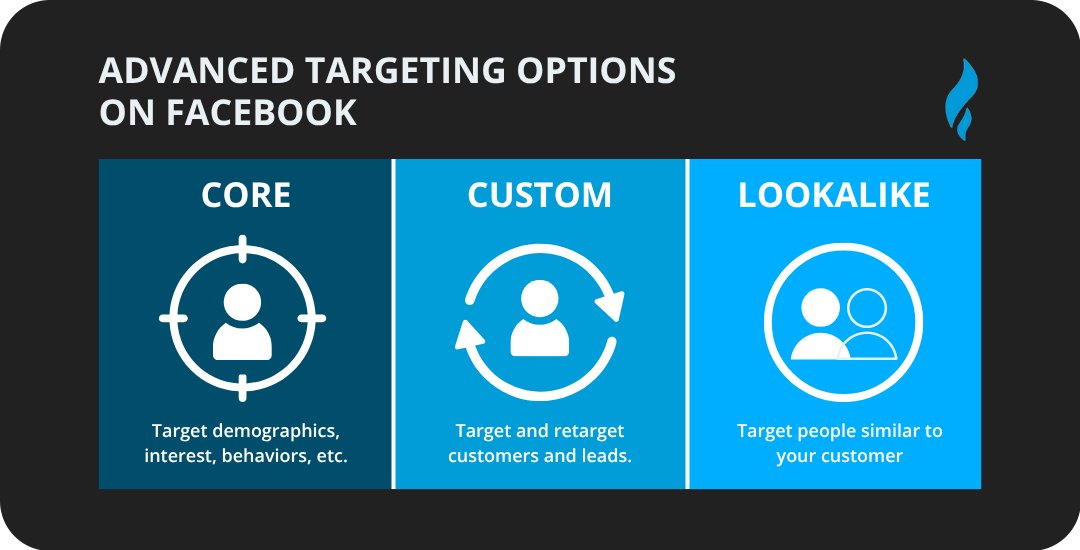
Your Facebook marketing strategy should include videos because they get more engagement compared to images or graphics. Facebook Live gets priority in feeds, so make sure you use that to your advantage.
But 85% of Facebook users watch videos on mute, so add captions to make your videos accessible to users watching without sound.
Instagram is all about visuals. You can use photos, high-quality graphics, and short videos (reels) to grab the attention of your audience. But you can’t add links in your Instagram post, so there is less chance of driving traffic back to your site.
You can use Instagram hashtags to increase your visibility, and the best part is that using hashtags on Instagram also grows your followers organically.
Regularly search your hashtags to find user-generated content, learn more about your audience and niche, and use these insights to increase Instagram engagement.
Hashtags can add personality to your brand. You can add 30 hashtags to an Instagram post, but using 3–5 relevant ones is more effective.
Instagram promotes carousel posts in the algorithm and shows different images from the same post on repeat views. This increases your chances of engagement, giving you another chance to capture the attention of the audience who don’t engage with your carousel the first time.
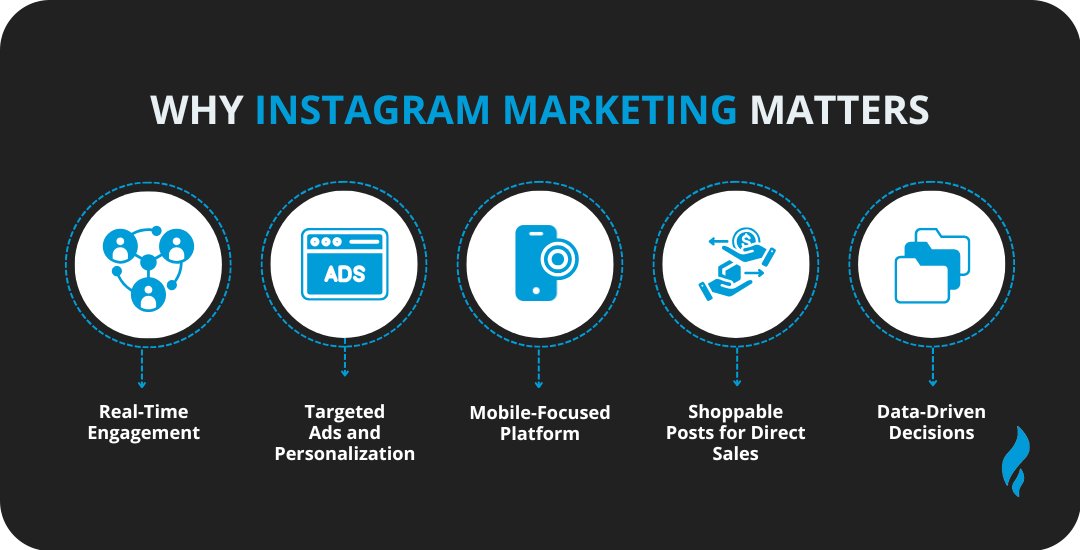
You can use Instagram stories for business to share more content without posting on your feed. If you’re verified or have over 10,000 followers, you can add links to drive traffic to your website or other pages.
TikTok
TikTok is a platform for short videos and fun content. Your business can test new ideas and different content styles on TikTok. You can find trending topics in the TikTok Search bar and the hashtag #TrendAlert to spot trends and join them while they’re growing.
Use TikTok hook ideas to grab the attention of your audience, and partner with Influencers for TikTok marketing to go viral and increase your engagement, reach, and visibility.
You don’t need big-name, micro-influencers with a loyal audience are best for small businesses on TikTok because they can improve your social media ROI.
Use user-generated content to connect with your audience and build authority and trust. You should ask followers to tag your brand or use your hashtags, and always credit the original creator when you repost or use features like duets or stitches.
LinkedIn is a professional platform where you can show your brand expertise, join industry discussions, and share meaningful content. You can use LinkedIn to position your brand as an industry leader and connect with potential partners and future employees.
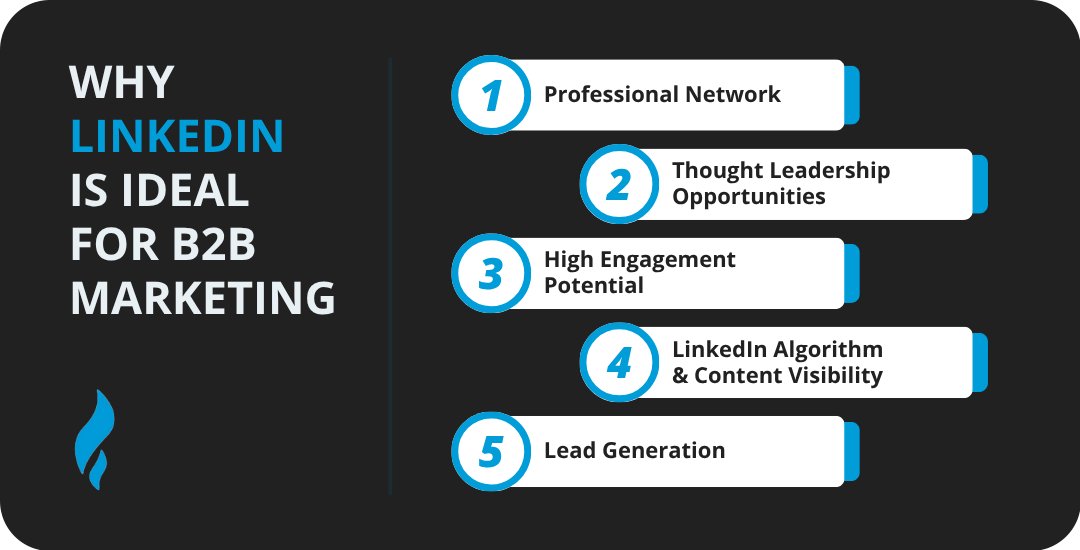
Your LinkedIn marketing strategy should focus on visual content for more reach and engagement. Keep your posts short and use bullets or line breaks to improve readability.
LinkedIn is best for B2B online marketing, so you should review LinkedIn content to match your brand voice and build authority. Also, use LinkedIn’s Content Suggestions to find topics relevant to your industry.
You can also speak to specific groups by calling them out at the start of your post. And use the audience targeting option of LinkedIn to reach people based on their location, language, company size, industry, or job role.
X (Twitter)
X (Twitter) is a platform where you can share a mix of news and social media content with short and clear messages (tweets). Tweets have a 280-character limit, which keeps your message short and readable.
Your tweets on X (Twitter) should reflect your brand personality. Use videos to increase X (Twitter) engagement. Keep your videos short and simple, and use branded hashtags. Use relevant hashtags for best results.
You have to use different types of content to keep your audience engaged. Find content pillars that resonate with your audience.
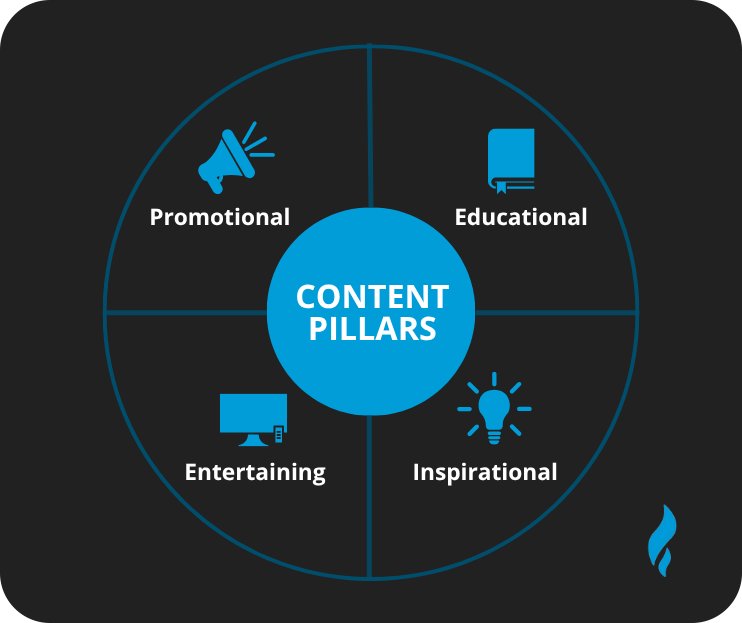
Content pillars are themes your brand follows, like entertainment, education, or behind-the-scenes posts. There are 4 main content pillars:
| Content Pillar | Description |
|---|---|
| Educational | Answer customer queries and questions with useful information. You can use formats like numbered lists, tips, and FAQ posts. Cover what matters to your audience and updates related to your brand or industry. |
| Entertaining | Grabs the attention of your audience with easy-to-consume entertaining content. Your content doesn’t have to be funny, but it should be interesting. You can use BTS (behind-the-scenes) posts or before-and-after scenes. |
| Inspirational | Positive or memorable content that makes the audience feel something and encourages them to act or think differently. Share stories about your community efforts or social causes or how your business helps your customers. |
| Promotional | Content that guides your audience to take action with a CTA (calls to action). For example, “Buy now”. You should tell your audience exactly what to do when selling on social media. |
Plan what to post and when to post using the four content pillars to keep your content engaging without being overly promotional. Create a content calendar and use the best social media schedulers to keep up with the posting frequency.
Here are a few content types you can post on social media:
Blog Posts
Use your blog posts to create engaging social media content. You can turn your blog into social media content with a little effort, and it can drive traffic to your website and also keep your audience informed.
Industry Insights
You should post industry data to show your expertise and build credibility. Share insights, news, and research from trusted sources in your field.
Product Photos
Use creative images to show your product on social media. You should use shots that grab attention and align with your brand.
Product Videos
Post videos to show how your product works and highlight new features to effectively engage your audience.
Client Testimonials
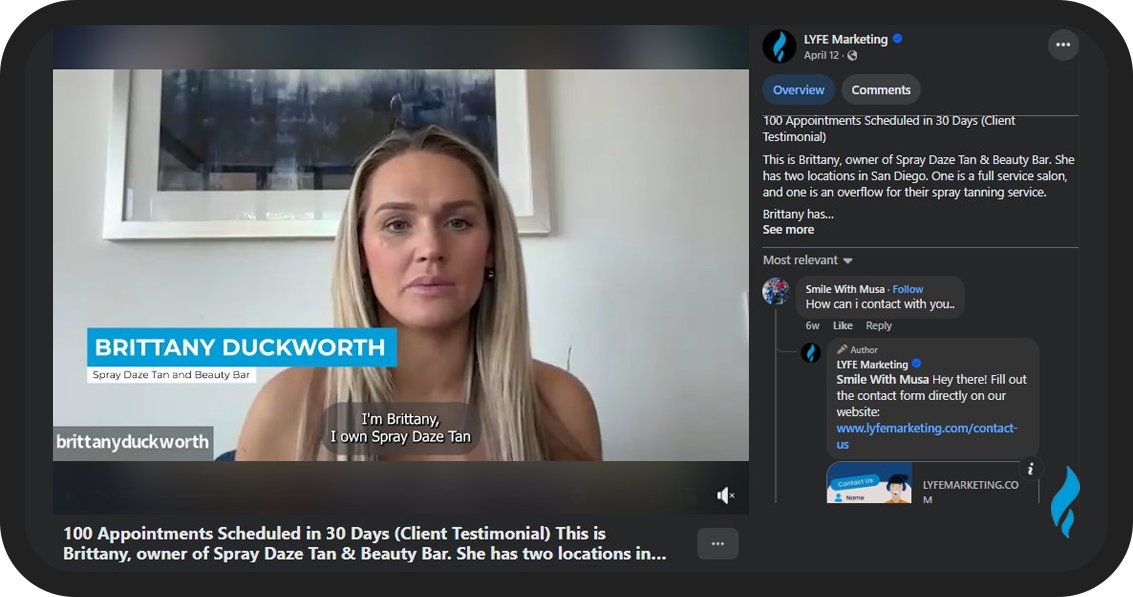
Ask your customers if you can share their review on social media, if they allow it reshare their testimonial with credit to them. You can increase your brand trust using this strategy.
Brand Events
You should promote your events, like webinars and workshops on social media to build interest and social buzz.
Company News
Share important updates and milestones like awards, client wins, or hiring a team member. Use a fun graphic to make posts more engaging.
Company Culture
Show your company culture to build trust and connect with your audience. You can use guest posts or BTS (behind-the-scenes) content to highlight your workplace.
Live Videos
Live videos get more engagement than regular posts. Use Facebook or Instagram Live to showcase product previews or demos in real time.
Giveaways And Contests
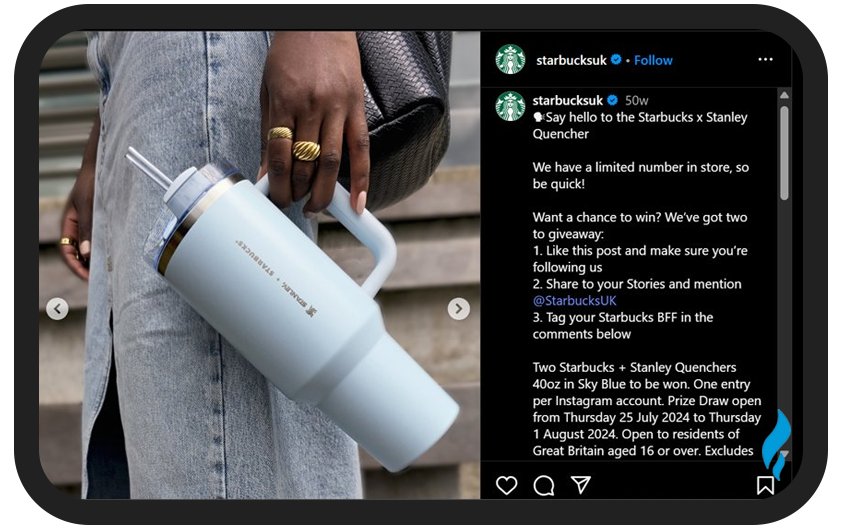
You should use giveaways to promote products online and attract new ones. Ask your followers to comment or share to enter, and provide clear rules. Here is an example of a giveaway from Starbucks
Questions
You can ask questions to spark conversation and increase engagement. Keep your questions fun and relevant to your industry. Also, share top responses in future posts to keep your audience interested.
Infographics
Post infographics to share step-by-step guides, research insights, or data that is helpful to your audience. You don’t have to create new graphics; you can repurpose website graphics for social media.
Influencer Content
You should partner with influencers who are relevant to your brand and reshare their content to improve your reach on social media.
Tips And Tricks
Turn your popular content into quick tips and expert advice on social media. For example, a social media agency can share tips and tricks from their social media experts on social media.
Publish At The Right Time
The next question is, when should you publish on social media? There is no one best time to post on social media. The ideal time to post varies depending on your target audience and the social media platform you post on.
Here is the best time and day to post on different social platforms for maximum engagement:
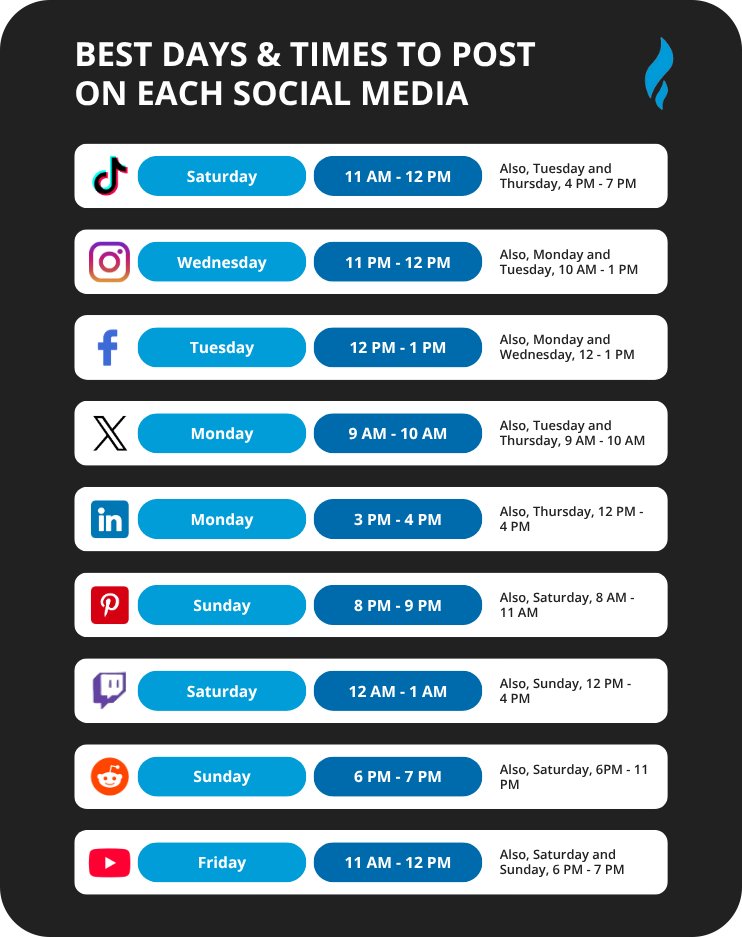
To improve your posting schedule, read these guides:
- Best Time To Post On Instagram
- Best Time To Post On TikTok
- Best Time To Post On YouTube
- Best Time To Post YouTube Shorts
Social Engagement: You have to engage with your audience on social media to show your brand listens to them and values their opinion. Engagement can be in the form of likes, comments, and shares.
A strong engagement rate means your content connects with your audience. You can measure engagement rate using this formula:

Social Monitoring: You should also track your brand mentions to spot messages and sentiment of your audience related to your brand. Use social listening tools to track these and respond to your audience to increase engagement.
You should use analytics tools to measure your performance and track social media KPIs. You can use them to track your content, understand your audience, and effectively use your social media budget to achieve the best results.
Important Definitions And Terms:
Impressions
It is the number of times your post appeared in someone’s feed or timeline. This means your post showed up on their screen, and doesn’t mean they engaged with it.
Reach
It is the number of people who see your post. Reach varies based on your content quality and the time you post on social media.
Engagement Rate
This metric shows how engaging your content is on average. You can calculate engagement by dividing likes, comments, shares, and saves by your total followers.
Conversion Rate
The number of users who complete your CTA (call to action) compared to the total clicks on your post is the conversion rate. You can calculate the conversion rate by this formula:
Conversion Rate = (Total Conversion / Total Clicks) x 100
Follower Growth Rate
Track follower growth rate to see if you’re gaining or losing followers. You can calculate this by the following formula:
Follower Growth Rate = (Net New Follower / Total Followers) x 100
You need to invest time and be creative to build a social media following. But you can fast-track your journey on social media with paid advertising to target a highly relevant audience that is genuinely interested in your brand.
We are an award-winning social media agency that can help you grow on social media with our social media marketing services. Fill up this contact form today to get the best results on social media.
What are the 7 C’s of social media?
The 7 C’s of social media are Community, Content, Curation, Creation, Connection, Conversation, and Conversion. They help you stay focused and connect with your audience.
What is the 5 5 5 rule for social media?
The 5 5 5 rule for social media means liking 5 posts and commenting on 5 posts in 5 minutes. You can increase engagement traffic, which can lead to more sales.
What are the 5 C’s of social media?
The 5 C’s of social media are Community, Contribution, Conversation, Connection, and Collaboration. You can build relationships, engage your audience, and grow your online presence using this strategy.
What are considered social media best practices?
Social media best practices include planning visuals, videos, and captions for each post. Focus on clear messaging that supports your goals, engages your audience, and is scheduled in advance to stay consistent.
Other Social Media Marketing Resources
- What Are The Different Types Of Social Media Marketing Agencies?
- Top 17 Social Media Marketing Agencies Columbus 2026
- Top 15 Social Media Marketing Agencies Cleveland 2026
- Top 14 Social Media Marketing Agencies In Cincinnati 2026
- Top 14 Social Media Marketing Agencies Huntsville 2026
- Top 14 Social Media Marketing Agencies Birmingham 2026
- Top 11 Social Media Marketing Agencies Montgomery 2026
- What Does A Social Media Marketing Agency Do?
- What Is The 5 3 2 Rule For Social Media?
- What Is The 70 20 10 Rule Of Marketing?


One Response
Hey! Great article indeed, Loved the way you explained everything related to social media daily managing. Keep the good work up