



Struggling to grow your online presence? Successful marketing starts with understanding how online marketing works and how to reach the right audience. To create successful online marketing campaigns, you need to understand your target audience, where they spend time online, and which tactics will get their attention.
What Is Online Marketing?
Online marketing is using the internet to promote the products and services of your business to potential customers. Online business marketing and techniques include online ads, social media, SEO, email marketing campaigns, and pay-per-click ads.
You meet your audience where they are online to attract, engage, and turn them into paying customers.
Online Marketing vs. Traditional Marketing
Marketing online is quite different from traditional marketing. Online marketing provides value, such as helpful content, while traditional marketing mainly aims to drive sales.
For example, a cleaning brand might publish a blog about non-toxic ingredients to educate readers, which is online marketing. A traditional approach would be placing a newspaper ad promoting the product directly.
In online marketing, you can track data and insights to measure what’s working and what’s not. This allows your business to improve its online advertising strategy. While traditional marketing campaigns show limited feedback, you can not measure the effectiveness of your efforts.
Why Is Online Marketing Important?
Digital marketing tools and online trends are the most effective ways to increase online sales and establish brand authority for your business. Here are a few key reasons why online marketing matters for business owners:
Lower Marketing Costs
Online marketing is cost-effective compared to traditional marketing options. A print ad can reach 100 people a month, online marketing can connect your business with thousands of potential customers in a day.
The best part is that you can reach the most relevant audience using different types of online advertising that also result in more sales at a lower CPC (cost per conversion).
More Marketing Options
Traditional marketing has limited ways to advertise. Online marketing gives you more control and flexibility. You can choose to perform A/B testing and choose what works best for your brand.
There are options like photo ads, video ads, carousel ads, and much more. You can choose any option according to your budget and goals. For example, you can run a video and image ad on Facebook, and based on results from A/B testing, spend more ad revenue on the one bringing in more conversions.
Customer Convenience
Online marketing is convenient for customers because they don’t have to visit any store or make calls to get details about what they want. They can get all the answers from your website and make purchases. This convenience will attract more customers to choose your business, increasing your online sales.
Increased Quality of Online Traffic
You can reach a specific group of people with targeted online marketing. This brings in the relevant audience that will convert into paying customers and increase your brand visibility.
For example, if you sell baby clothes, you can target parents or people who recently searched for baby items to get qualified leads that are looking to make a purchase.
Broader Reach
You can reach a global audience using different online advertising platforms. If you promote products online, this allows you to reach people anywhere in the world.
For example, a local clothing store can reach customers nationwide with online ads. You don’t have to rely on foot traffic or local ads, and it grows the reach of your business beyond one region.
Track and Improve Your Marketing Strategy
You can track your digital marketing campaigns to measure the results. There are tools to measure and track insights like traffic, conversions, and cost per conversion. They help understand what makes people want to buy and adjust your campaigns to get more conversions and return on investment (ROI).
Who Uses Online Marketing?
Any business can use free business advertising, it works well for small businesses, large companies, and entrepreneurs alike. For example, a local shop owner can use internet marketing to advertise their shop and reach people beyond their town. An accounting firm can market their services during the tax season to get more customers.
So, no matter your business, you can use internet marketing to generate many ideas to increase sales and promote your business. Online advertising is mostly used by:
B2B Companies
B2B online marketing companies sell their products or services to other businesses. They can use digital marketing to attract qualified leads and convert them into clients. For example, Salesforce offers CRM and commerce tools to companies. They use their website, LinkedIn, Facebook, and other digital marketing platforms to promote their services.
B2C Companies
B2C companies sell their products and services directly to consumers. Digital marketing works well for these businesses because it helps them drive sales without needing a salesperson or an in-store visit.
For example, B2C companies can advertise on Facebook. Their customers can see these ads, click them, and make a purchase from their online store.
Types of Online Marketing
There are different types of online marketing you can use to promote your business. Most common types of online marketing include:
1. Content Marketing
Content marketing is the most common type of online marketing that is incorporated in almost every type of digital marketing strategy. You use content marketing to increase your brand awareness, educate potential customers, provide valuable insight to your existing customers, and increase traffic to generate leads.
Content marketing allows you to create relevant, valuable content for potential customers to make them familiar with your services or products and increase their chances of conversion.
Different types of content marketing include blog posts, videos, eBooks, podcasts, infographics, and white papers.
2. SEO (Search Engine Optimization)
SEO (Search engine optimization) helps your website show up higher in SERPs (search results) and increase your organic traffic, and generate better-quality leads.
For example, a social media marketing agency in Atlanta can use SEO to appear in relevant searches when someone searches for the services they offer.
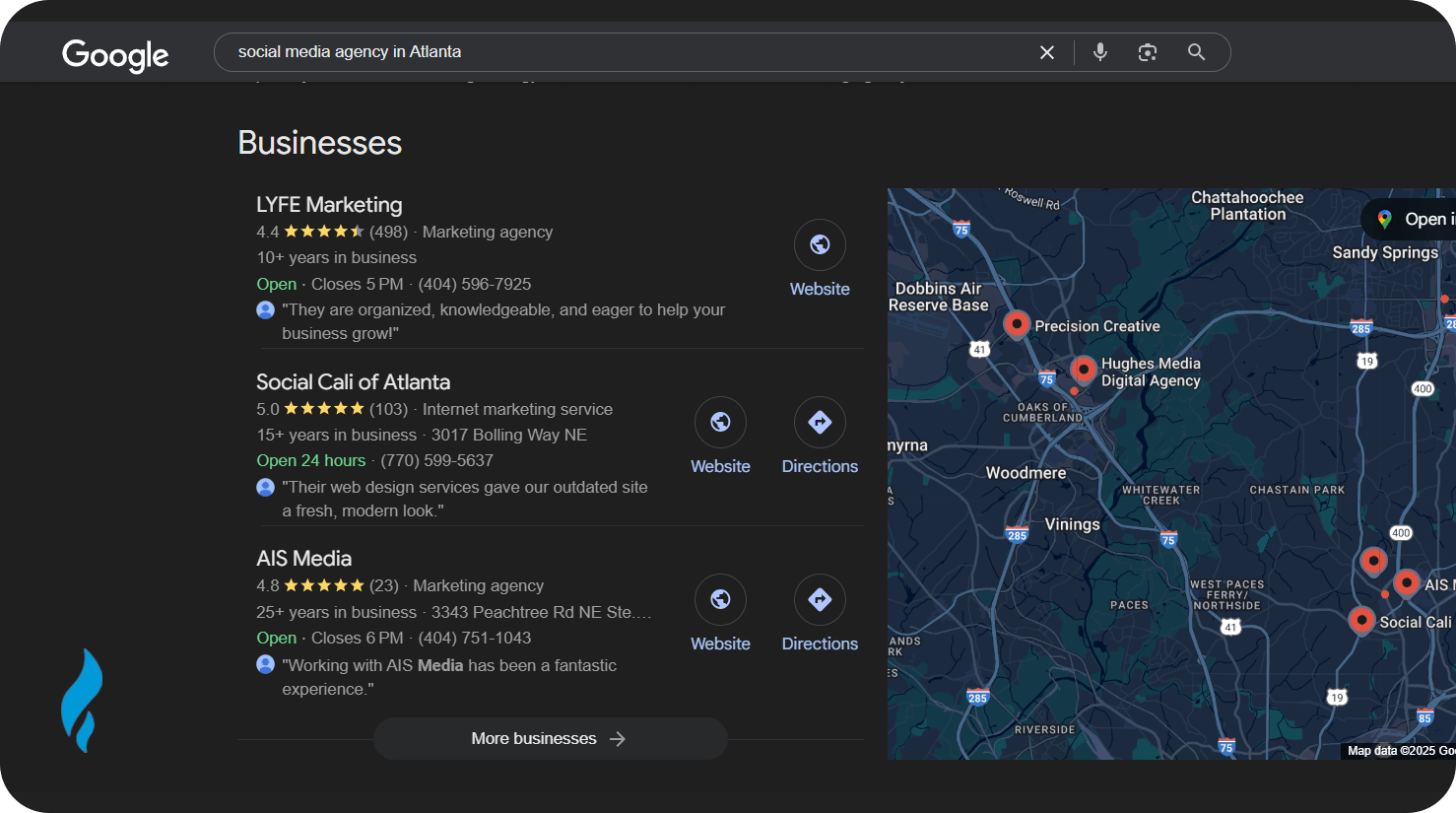
We use these strategies to help small businesses improve their SEO:
Improve Readability
When content is easy to read, visitors stay longer on your pages. This will increase your conversion rate and drop bounce rates. Use proper headings hierarchy, paragraphs, and bullets to make content easy to understand both for readers and search engines.
Keyword Targeting
It helps search engines understand who your content is meant for. When someone searches related terms, your content appears in the results.
Metadata
Search engines better understand your content if you add meta descriptions, titles, and alt text for images.
Get Backlinks
They can improve your SERP ranking. Backlinks from credible websites indicate your content is high quality.
3. Pay Per Click (PPC)
Pay-per-click ads appear on websites and search engines. They send users to your website, online store, or any landing page you want. The best thing about pay-per-click advertisements is that you pay only when someone clicks on your ad.
For example, you can run an ad using Google Ads. It will show up when someone searches for that specific keyword. You will pay each time someone clicks and visits your website.
You can run PPC ads on platforms like Google Ads, Bing Ads, Facebook, and Instagram.
How Does PPC Work?
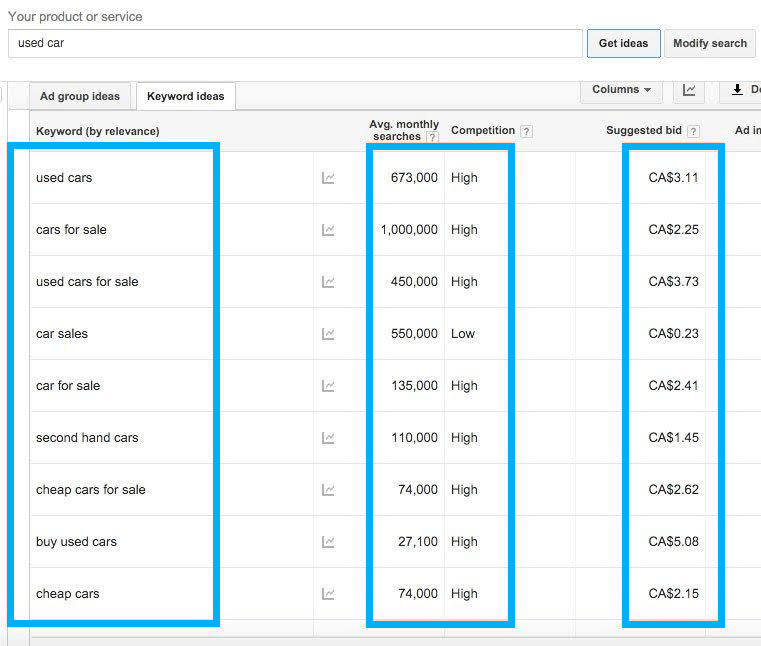
Google Ads uses keywords. These are usually phrases of 3-6 words.
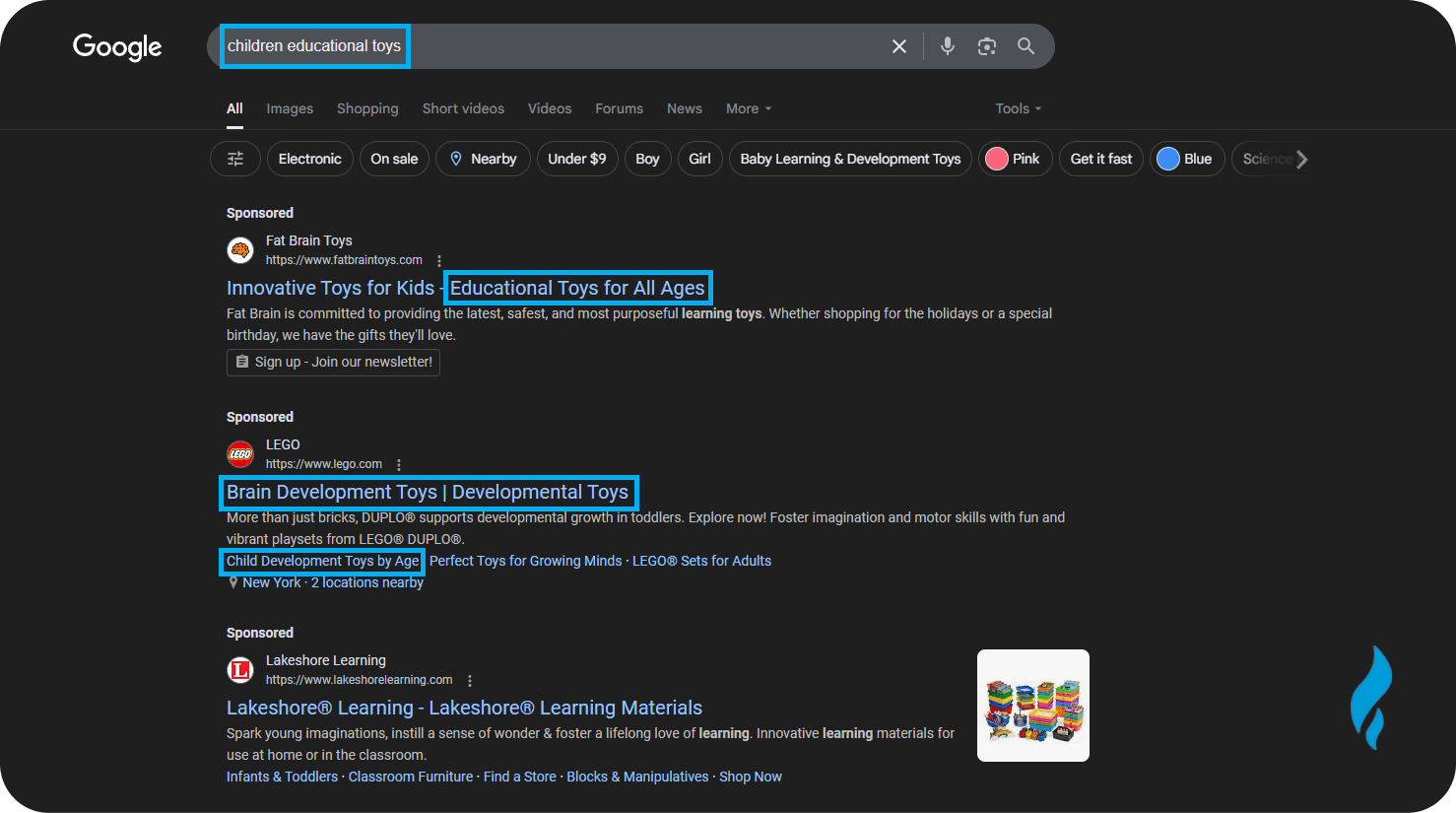
Tell Google the most you’re willing to bid for a certain keyword. Then, when someone enters that keyword in a search, Google looks at all the bids. It will show the ads based on the highest bidder.
They only charge you enough to beat the bid below you. The more competitive that keyword is, the more you’ll pay, as a general rule.
But there’s a catch. Quality Score.
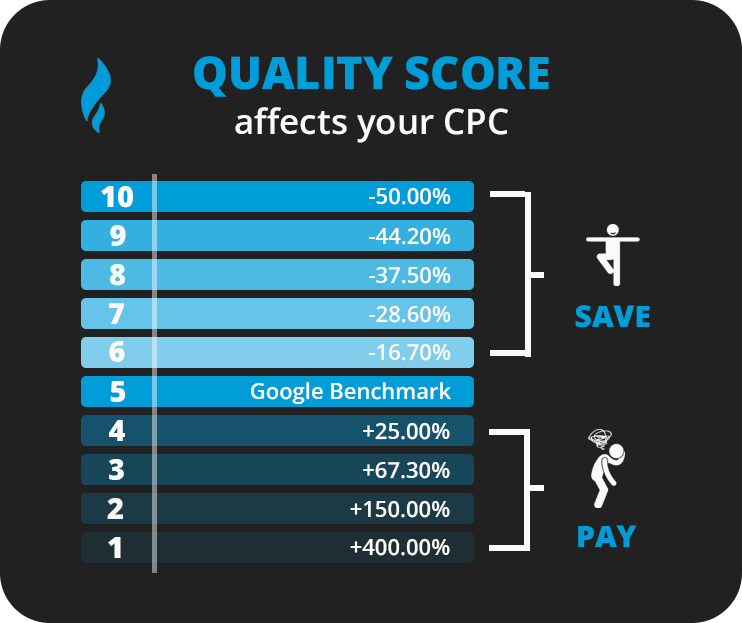
Quality Score Impact On Your Bid
Google wants people to be very happy with their search results. People are happy when the results are what they were looking for. Google allows lower bidders to win over higher bidders if it feels that their ad is more relevant to that search.
But they don’t make the call. Instead, they let the searchers make the decision about whether your ad was relevant. Here is what they look at:
- Click-Through Rate: Number of people who click the ad divided by how many of times it appeared
- How the person reacted to your website: If the person left quickly or didn’t click on anything, your ad seems irrelevant.
- Your performance history: The quality score is an average. If you let it go down, it takes a while to get it back up.
A person with a great quality score can save as much as 50% of the cost per click. If you have bad scores, you’ll pay as much as 400% more than someone with an average score.
How To Improve The Quality of PPC Ads?
Here is how we keep your score high:
- Proper keyword research: Use tools to understand what people are searching for and understand how much you have to bid to get that ad space.
- Competitor analysis: Know what the competition is doing so you can do it better
- Align your ad text with the keywords: It should be clear why your ad came up in that search
- Align your ad text with your target audience: The ad should speak to the challenges of your target audience and the reasons for the search.
- Dedicated landing page: Your landing page shouldn’t be your homepage. Link your ad to a relevant page that continues the search experience and matches what the customer was looking for on Google.
- Add negative keywords: These are words you don’t want associated with your brand or are irrelevant to the ad. If you’re a meal kit delivery service, you might have “meal kit delivery service” as a keyword. Now, if someone types “How to start a meal kit delivery service,” it’s best if your ad does not appear. It’s not what the person is looking for.
- Track analytics: Pay attention to how people are interacting with your ads and website. To get and keep a high-quality score, listen to what the numbers are telling you. Test ads, landing pages, and strategies to make it better.
Who Should Use Pay-Per-Click (PPC)?
PPC advertisement can be effective for nearly any kind of business. It’s all about doing your research and applying our online marketing tips to keep your Quality Score up.
4. Email Marketing
Email marketing is a personalized type of online marketing used to share updates, promotions, and product launches with existing customers. We call it personal because you reach customers in their inboxes.
This builds stronger connections and allows for custom messages for the personal touch. You can use email marketing to:
- Welcome New Customers
- Share newsletters with customers
- Promote promotional offers and discounts
- Share loyalty program updates
- Send Follow-ups
- Automated emails to keep customers engaged
For example, when someone buys from your online store, you can send a thank-you email and ask for feedback on the product.
With proper campaign management, a typical ROI on email is $44 for every $1 spent. You don’t get that kind of return on any other type of online marketing, which is why most marketers prefer email marketing.
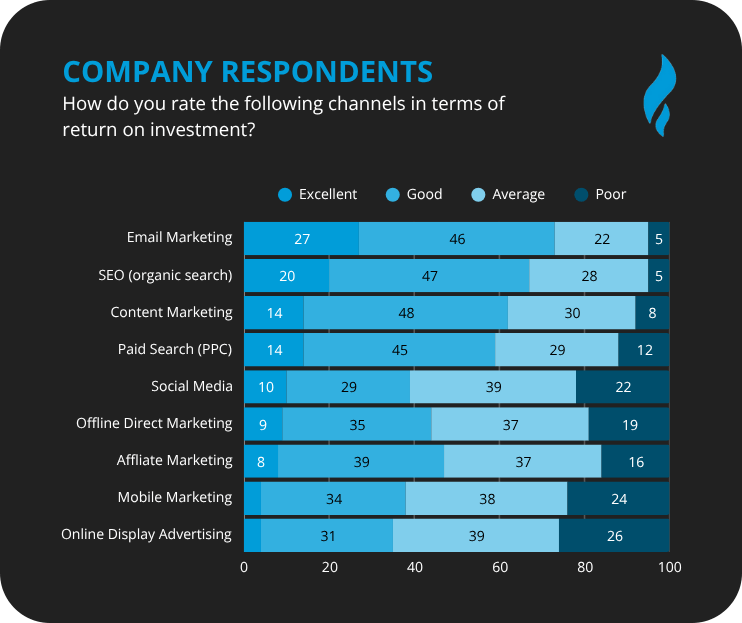
We use email automation and segmentation for the best results.
What Is Segmentation?
Email segmentation is when you take your email subscriber list and divide the subscribers up by one or more traits. Then you send each group content that is designed to be most relevant to that group.
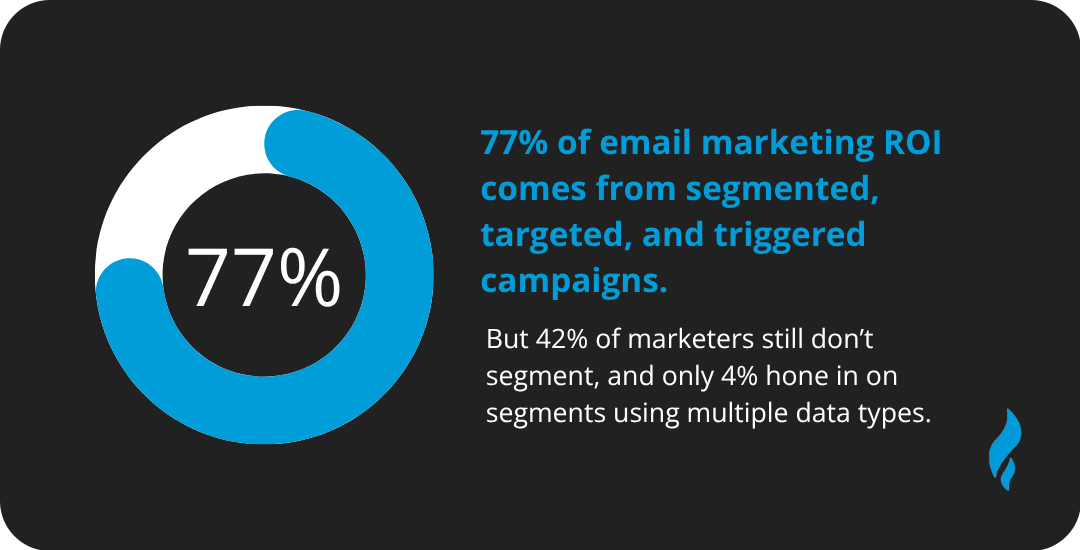
For example, you’re selling something that appeals to Millennials, Gen X, and Baby Boomers. But you realize that as broad groups they like different types of content, use language differently, respond more strongly to certain messages, & styles and use your products/services for different reasons.
To maximize relevance, adapt each piece of content for that group. You can also segment based on:
- Location
- Buying or other behavior
- Interests
- Job Roles
- Goals/Challenges
What Is Automation?
Automation is about sending the right message at the right time. It also helps eliminate monotonous and time-consuming tasks that can eat into profits fast.
To continue our above example, you might find that Baby Boomers are more likely to open emails at 4 AM on Saturday. Millennial emails perform better on Tuesdays at 8 AM.
You don’t need all that extra work. You don’t need to log on and send out the email at the right time. Simply send out your emails, and the automated software looks at which group should get it at which time.
It handles the specifics of who gets what when. You just focus on creating relevant content.
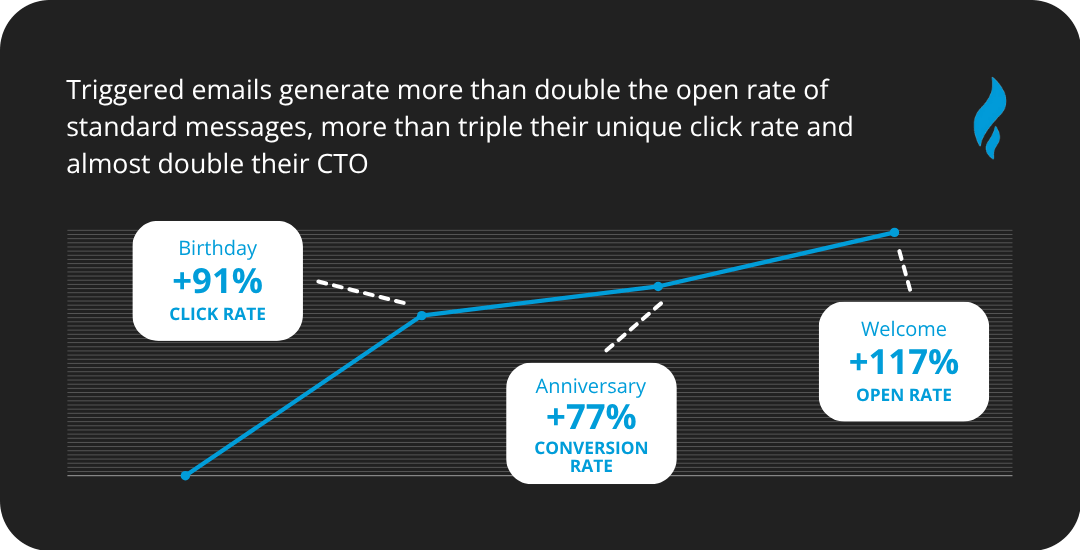
Another great way to use email automation is to set up event-triggered reminders. When an email is triggered by an event, around 60% of people will open it.
Compare that to a 15-20% open rate, which is a decent open rate for most other emails. This is your best opportunity to communicate something to a person. Just take a look at what Social Media Today found about open rates for emails triggered by special events.
Is Email Advertising Right For Your Business?
Email advertising is the best way to nurture leads and increase customer lifetime value. Customers are in a controlled environment where you take relevance to the next level. Relevance is what sells in advertising.
Any business that has a longer buying cycle or sells something that requires some consideration (Usually >$20) should be using email to get the best ROI.
Through segmentation and automation software, you can streamline your processes to maximize your return on investment. These types of software are more advanced and often cost more than a small business can justify.
If you’re getting into segmentation or automation, working with an email marketing agency is the most cost-effective. They can spread the costs across many businesses while delivering superior results.
5. Social Media Marketing
Social media marketing means using platforms like Facebook, Instagram, YouTube, TikTok, LinkedIn, and Pinterest to reach your audience and grow your online presence. These social media marketing platforms drive traffic to your website and increase sales.
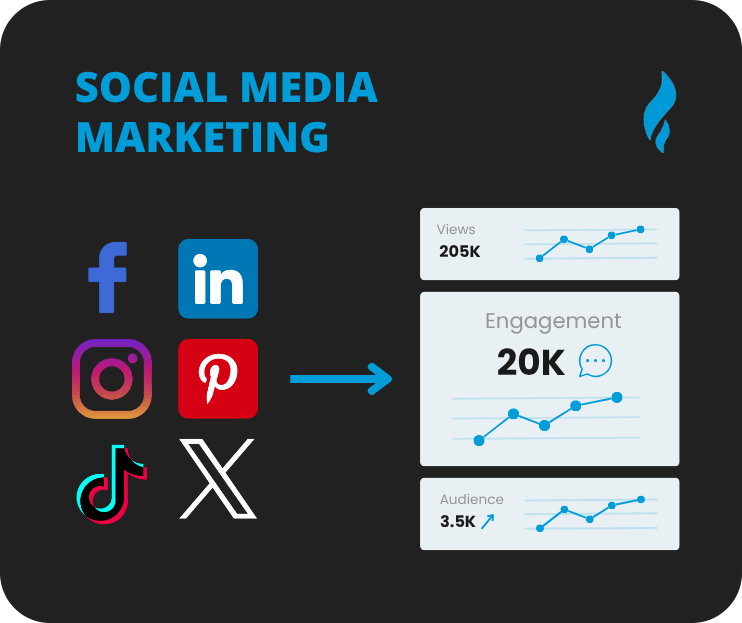
Over 3 billion people use social media to discover new products online, which makes social media marketing a top choice for most online businesses. If you’re not using social media, you’re missing out on brand visibility and lots of sales.
You can choose paid or organic strategies depending on your audience and the platforms you use to market your business.
Where Can You Run Social Media Ads?
Regardless of who your customers are, you’ll find them in one or more of these places, in no particular order:
- Facebook Messenger
- YouTube
- Snapchat
- Yelp – Yes, review sites are a form of social media. You’ll find very high-intention buyers here.
To determine which platform is best for you, consider where:
- Your target customer is active.
- Your target customer makes buying decisions
- You have a presence. You don’t need to have a business presence to buy ads on most social media platforms. But it will help you get a greater ROI.
- Understand how your target audience uses the platform. People will see right through you if you jump into online advertising clueless.
Quick tip: While it’s a good idea to be where the customers are, don’t try to be everywhere. You’ll be spread too thin to make an impact in one place, run out of money fast, and reduce your potential long-term ROI. You’ll end up looking inconsistent because it’s hard to manage. Focus on one or two top spots. Branch out later if you feel you can competently and consistently do so.
Who Should Use Social Media Advertising?
Any business can use this type of online marketing effectively. It’s all about understanding how people use the platform and aligning your ad strategy with it.
If you’re a real estate agency, then Yelp ads are a great way to reach people in those final moments before they choose a company. Instagram would help you reach people earlier when they’re dreaming of the perfect home.
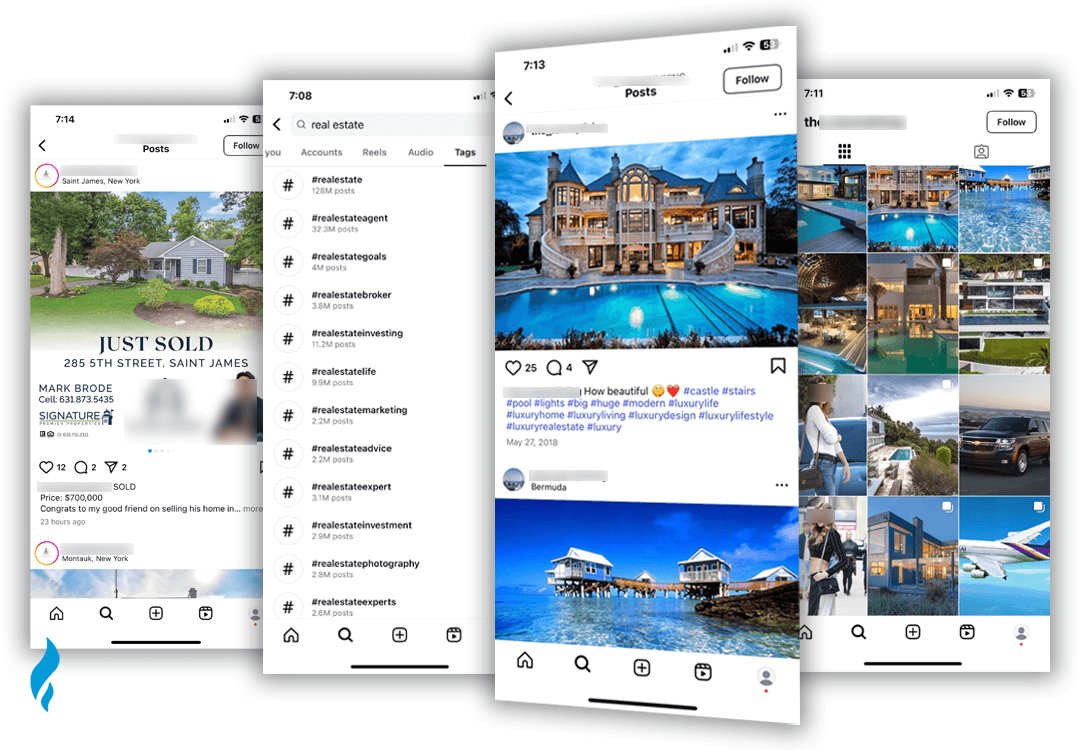
If you’re an e-commerce site, then Yelp probably isn’t ideal. And LinkedIn really wouldn’t make sense. Pinterest, Facebook, or Instagram would be much better options.
6. Affiliate Marketing
In Affiliate marketing, you pay marketers a commission for promoting your products or services. For example, a house plant company can partner with a plant blogger to promote their products.
The blogger will earn a commission for each sale made through his referral. You can track his sales with a unique tracking link. Affiliates are paid for pay-per-click, pay-per-lead, or pay-per-sale models.
This method benefits both the affiliate and the company because affiliates earn money from their content, while companies pay only when the marketing leads to a sale.
How Do You Get Started With Online Marketing?
Your marketing strategy is unique, depending on the size of your business and marketing goals. Here are some common steps all businesses can take to create the best online marketing strategy.
1. Create A User-Friendly Website
A user-friendly and clean website attracts visitors and keeps them on your pages. Good design is the secret to outsmarting competitors and appealing to your audience. It reduces bounce rate and improves your search engine rankings.
Focus on these key elements to attract and retain your audience:
- Explain what your business offers in a clear copy
- Use clear menus and easy navigation
- Include CTA (calls-to-action) buttons to guide visitors
- Use images and break up text to make content easier to read
2. Research Keywords
Use keywords to optimize your website for search engines. You should also add commonly used search terms and FAQs (frequently asked questions) from your industry to better results.
For example, if you sell microphones for singers, focus on keywords your audience is likely to search. Like:
- Best microphones for vocals
- How to choose the right microphone
Add keywords in your website URL, image alt text, body text, navigation, and headers. You can also use them in content like blog posts, eBooks, research articles, and white papers.
3. Start A Blog
Write blogs around relevant keywords to educate and engage your target audience, cover evergreen informational blogs to get organic traffic, establish your relevance, and build trust.
For example, a blog on “best microphones for singers” can feature your products along with the benefits they provide without being overly promotional.
4. Use Email Marketing Tactics
Email marketing is an effective way to connect with both new and existing customers. It builds loyalty and keeps your audience engaged. You should use email marketing to share content that your audience finds useful. Avoid sending too many emails at once to prevent unsubscribes and keep your email marketing effective.
5. Develop Your Social Media
If you’re new to social media, start by researching which platforms your audience uses and how your competitors market there.
Simple ways to get started include running contests or campaigns that encourage people to engage with your brand. For example, offer a prize to someone who follows your page or shares it with a friend.
You can combine social media with other marketing strategies. For example, share your blog posts on social media to reach more people. You can also promote your email signup on your social channels to grow your list.
Examples Of Online Marketing
West Coast Goalkeeping
They used organic Instagram Reels and paid social media advertising to showcase their product and got over 65,400 organic views and a 44:1 ROAS (return on ad spend).
The ROCKY Statue
They used our social media advertising services and PPC ads to achieve 25% sales growth, 20% reduction in cost per lead, 30% improvement in search engine visibility, and an 18% boost in ad engagement.
Wrecked Angles
They used Meta (Facebook) advertising campaigns to increase the reach of their original humor content. They got over 101,000 new followers and more than 11 million total views with targeted Facebook ads.
Seaglass Mental Health
We managed their Google Ads and social media advertising and increased their leads by 121% month-over-month. They got 49 leads in just 30 days.
Looking for more? Check out our online marketing 101 guide, and if you’re looking to grow your brand through these and other types of online marketing, we can help. Contact us to book a free consultation.
Types of Online Marketing FAQs
What are the top 7 types of digital marketing?
Email marketing, content marketing, social media marketing, SEO (search engine optimization), affiliate marketing, pay-per-click marketing, and influencer marketing are the top 7 types of digital marketing.
How many types of online marketing are there?
Online marketing can be broken into 6 main categories, including Content Marketing, Email Marketing, Social Media Marketing, Pay-per-click, Search Engine Optimization, and Affiliate Marketing.
What are 10 types of digital marketing?
The 10 types of digital marketing include the following:
- Email marketing
- Content marketing
- Social media marketing (SMM)
- SEO (search engine optimization)
- Affiliate marketing
- Mobile Marketing
- Pay-per-click (PPC) marketing
- Influencer marketing
- Online Public Relations (PR)
- Video marketing
What are the 9 types of digital marketing?
Affiliate marketing, pay-per-click marketing, email marketing, social media marketing, mobile marketing, SEO, content marketing, influencer marketing, and video marketing are the 9 types of digital marketing.

