



What Is Online Marketing?
Online marketing, also digital marketing, is the practice of using the internet to promote products and services of your business to potential customers. Online business marketing and techniques include online ads, social media, SEO, and email marketing campaigns.
You meet your audience where they are online to attract, engage, and turn them into paying customers. This is different from offline marketing, which relies on print, billboards, TV, and radio instead of digital platforms.
Converting this audience from offline platforms is difficult since you need to move them from traditional media to a website or other online platforms. But on the positive side, promoting a product or service was costly and hard to track before online marketing.
For example, TV ads relied on focus groups to measure brand awareness. Today, online marketing is more accessible.
Any business can run low-cost campaigns and track results in real time with online marketing. You have tools available to test and improve your campaigns to boost performance and ROI.
Benefits Of Online Marketing
A major advantage of digital marketing is the ability to track your campaign results and see how visitors interact with your content on different digital platforms.
You can analyze digital marketing channels that generate conversions to understand what led those visitors to make a purchase. Mobile apps and analytics tools can show you:
- Which marketing channels and campaigns bring in cost-effective customers, based on the number of visitors and cost per visit?
- Which channels help bring in customers with higher lifetime value? Like email and social media are effective for repeat sales and keeping customers engaged.
- Which customer groups show strong engagement and are more likely to buy higher-priced products? This is common in software or apps, where engaged users are more familiar with your brand and are easier to upsell.
Effective Online Marketing Tools
Here are key digital marketing tools to help run and manage a strong digital marketing campaign:
- Social Media Marketing
- PPC (pay-per-click)
- Content Marketing
- Email Marketing and Automation
- SEO (search engine optimization)
- SEM (search engine marketing)
- Affiliate Marketing
- Online Webinars
- CRM (customer relationship management)
- Web & Marketing Analytics
- A/B Testing
- CMS (content management systems)
You know the types of online advertising, let’s look at some examples:
Examples Of Online Marketing
Digital marketing offers many ways to grow an online business and reach more people, but it can sometimes feel impersonal since messages are delivered virtually.
You need a clear understanding of the needs of your customers and their preferences to shape your strategy and be effective.
Run test campaigns across different channels and share what you learn with your team to keep them aligned. The best online marketing reaches local and global markets. But to get attention, you need to be competitive, offer a clear value proposition, and have a strong brand voice.
Here are some examples of online advertising campaigns:
- The ROCKY Statue restructured their Google Ads strategy and expanded targeting to international markets. This resulted in a 25% increase in sales within the first month, a 20% reduction in cost per lead, a 30% increase in search visibility, and an 18% boost in ad engagement.
- Wrecked Angles used Meta (Facebook) advertising campaigns to increase the reach of their original humor content. They got over 101,000 new followers and more than 11 million total views with targeted Facebook ads.
- Seaglass Mental Health partnered with LYFE Marketing to manage their Google Ads and social media advertising. They saw a 121% month-over-month increase in leads.
- West Coast Goalkeeping used organic Instagram Reels and paid social media advertising to showcase their product and got over 65,400 organic views and a 44:1 ROAS (return on ad spend).
How To Start Marketing Online
You need to define clear and measurable goals to start online marketing. Ask yourself what you want to achieve. 100 new customers, 10,000 social media followers, or 1250 B2B leads?
Specific targets can help you track progress and stay on course. Plan out how you will increase your online presence to achieve your marketing goals. You should create an online marketing strategy or hire the best social media agencies to help you out.
Here are some fundamentals and online marketing tips to get started:
- Set up an eCommerce store to list your brand’s products online.
- Start a blog or podcast to share useful & informative content. This will increase your brand awareness and grow your audience.
- Ask customers to share their experience. It can be reviews online, a case study, or a testimonial to build trust with new buyers.
- Create a landing page with a lead capture form to drive traffic and generate leads in B2B online marketing.
Analytics platforms like Google Analytics can help you track your marketing campaigns for free. You can also use a free content marketing platform to keep your marketing management team and content organized.
How To Start With Web Analytics
A strong digital marketing plan includes clear goals and a way to track progress from the start. You should set your metrics at the start because you can’t go back and measure past activity or recover missing data later.
- Create a measurement plan to identify actions potential customers should take on your site. It can be clicks on your sites or filling out a form. Map these actions to stages in the customer journey to track and improve performance.
- Use a free web tracking tool to start measuring user actions. Over half of all websites use Google Analytics, which is simple to set up and tracks key website metrics with minimal effort.
- Use web analytics to understand customer behavior, research your market, and study visitor demographics. This data helps you make better marketing decisions, set prices, and target the right audiences in your campaigns.
You can take it one step further using surveys, in-person conversations, and user testing to understand the complete user experience beyond web analytics. Audience segmentation can be used to create actionable insights.
Optimizing Your Online Marketing
In online marketing, you have control over the digital experience, and you can use it to optimize and measure performance. Businesses optimize digital campaigns for search engines by using data like search traffic and visitor demographics to improve content.
Write for your audience, not just search engines. Search engines are effective at identifying helpful content, so avoid trying to game the system as it can hurt your rankings.
You can promote products online with social media campaigns based on your customer demographics. Focus on engaging your audience and showing how your products work.
Social media is also ideal for gathering customer feedback and encouraging product reviews. Track how changes affect the buyer journey and use A/B testing to measure results and understand how customers respond.
You can also combine online and traditional marketing. Customer behavior can differ between digital and in-store, but your business can succeed by linking the two by promoting in-store deals online and vice versa.
Our Digital Marketing Formula
Here’s the formula for marketing an online business:
Great Content + High Visibility + Precise Marketing Funnel = Traffic, Leads, and Customers
This approach is online marketing 101: keep it simple, focus on value, and stay consistent. We’re an online business, and this is exactly how we’re generating millions of visitors to our website.
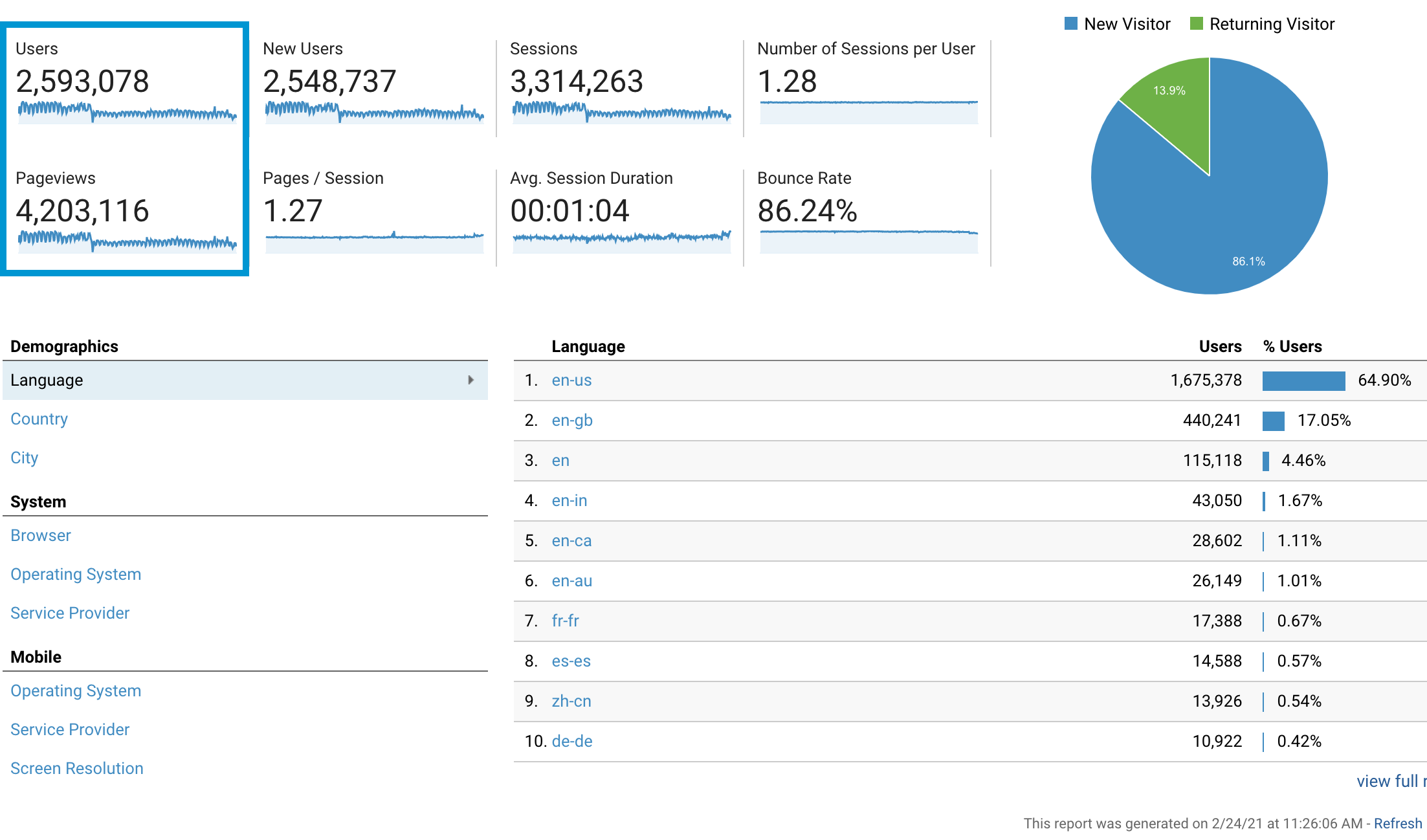
We will show you how to do the same thing to generate more awareness, traffic, and increase online sales for your business.
How To Be Successful In Online Business Marketing
When it comes to marketing an online business, people think it is very complicated. But on a high level, it’s not. You just have to understand how your customers use the Internet, and you develop a skill to interact with them.
If you don’t understand how people use the Internet, you won’t be successful at marketing your business online. Don’t worry, there’s only one big thing you need to know about internet marketing.
That can be summarized in one word: Content.
Everyone on the Internet is consuming content. Whether that’s in your email inbox, Instagram news feed, or even in this post, content is the magnet that captures the attention of people. This means if your business does not have any content, you effectively have no way of generating attention on the Internet.
No content, No attention, No traffic, No customers.
If you’re not generating enough traffic in your business, your problem is in one of the areas of the formula for online business marketing. So let’s drill down into each of these areas so you can grow your online business.
3 Stages Of Our Formula In Marketing An Online Business
Stage 1: Content
 What is content? Content is anything that you can read, listen to, or watch.
It includes blog posts, podcasts, videos, and so on. If you think about it, no marketing channels would exist without content.
Like, who would get on YouTube if there were no videos to watch? Or who would check their email campaigns if there were no emails? These platforms would not exist without content.
These platforms exist by content, so the only way you can effectively market your business on these channels is through content.
For example, if your business does not have a website, how in the world are people going to find it on Google? And if your website does not meet Google’s best practices, why in the world would they rank it first in the search results?
The first step is to create content.
Lots of content. You have no chance at marketing your business without content.
The second step is to make sure it is quality web content.
You need to create value. It’s a cause-and-effect relationship. If there is no value, it will have no effect. In other words, no engagement, traffic, or leads. Here is how can can create quality content:
How to Create Content
There are a lot of ways to create content, but as a content marketing agency, we like this content pyramid by Gary Vaynerchuk.
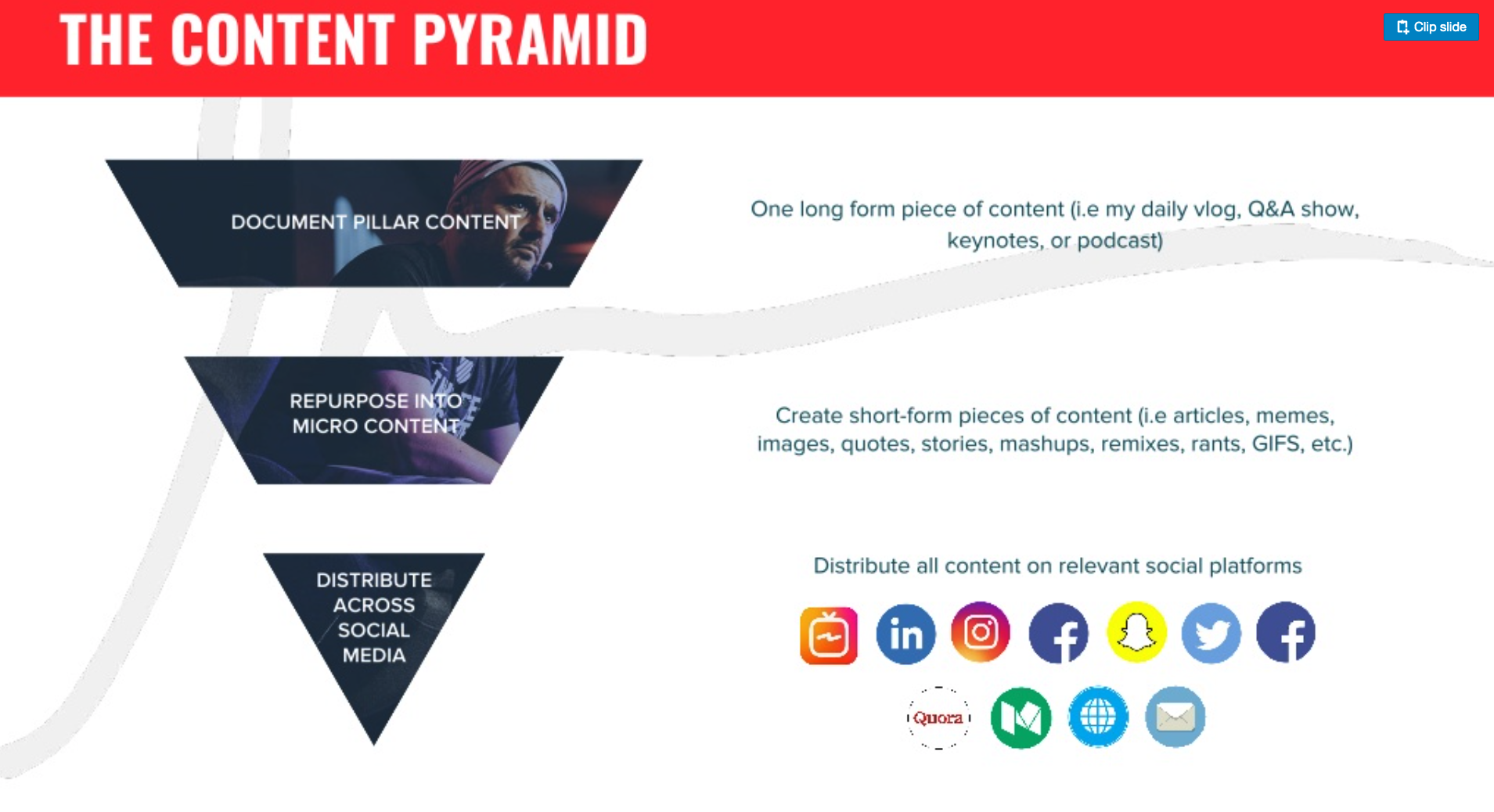
Top-Down Approach
You start with a big piece of content like a blog, video, or podcast to share on your website, YouTube, or podcast. Then, you take snippets of that larger content and share small pieces of it on the best social media platforms out there.
Bottom-Up Approach
Not everyone can create these larger pieces of content, so they can take the Bottom-Up approach. You can start by publishing micro-pieces of content consistently, which results in a high volume of followers, traffic, and conversion rates over time.
For example, a lot of our clients focus on publishing several pieces of helpful micro-content to generate customer engagement.
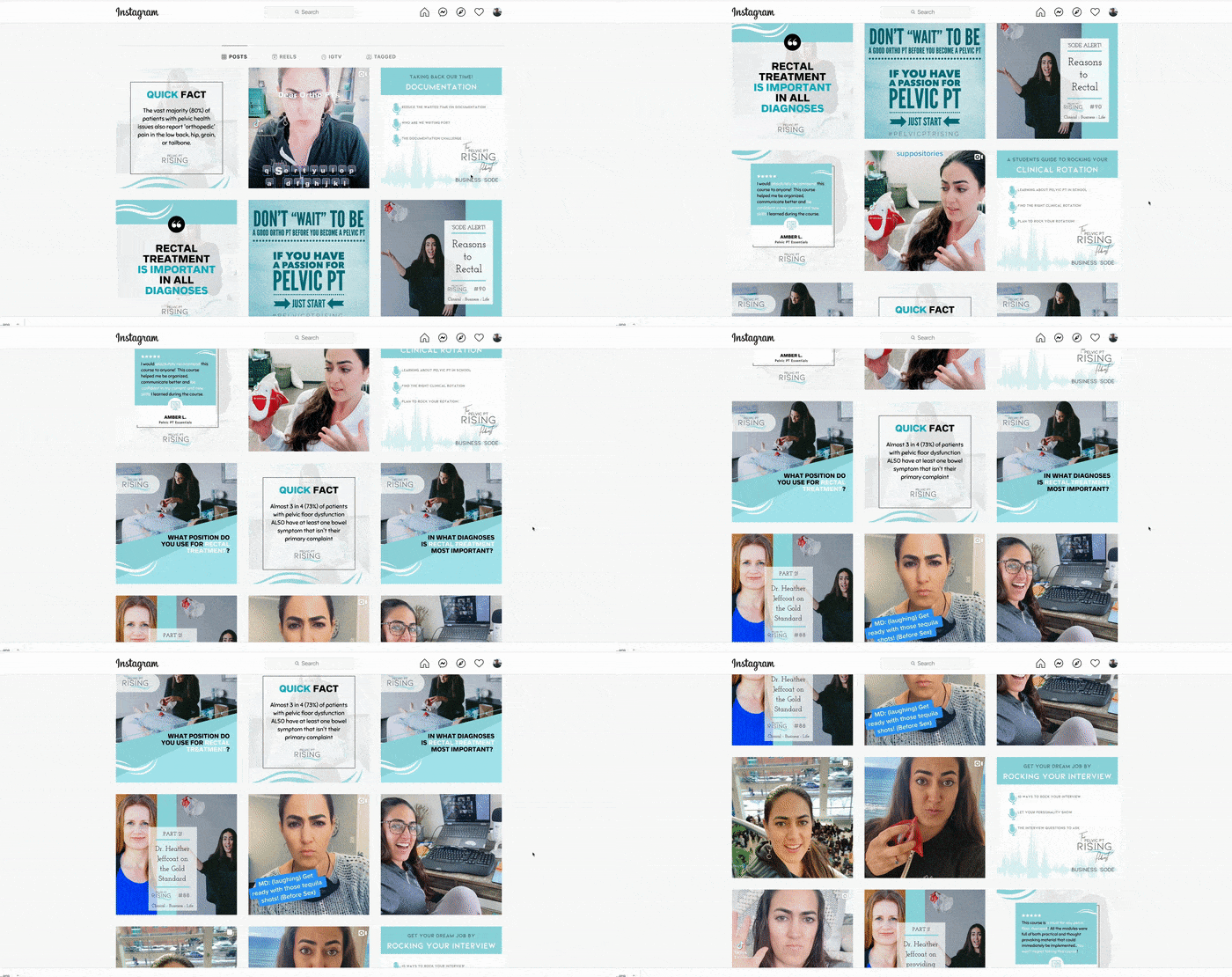
This engagement leads to a better relationship with their customers and more traffic to their websites. Now, you know you need effective content to market your online business.
Stage 2: Visibility
Great content alone is just a part of the equation if you want to be successful at marketing your online business. Here’s how you can increase your visibility for free in one sentence:
Make it easy for people to find your content online.
For example, millions of people are already searching for content on Google. You can reach them for free by including keywords that people are searching for on your website in a way that complies with Google ranking factors.
The more website engagement you have, like backlinks, traffic, and user experience, the more reason Google has to trust your website with higher rankings.
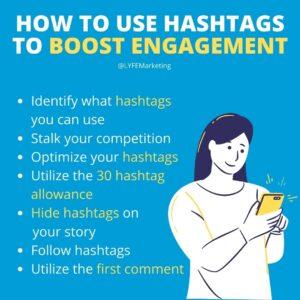 On social media, the most popular way to reach people for free is by including hashtags in your social media posts. Millions of people use hashtags and keywords to find the content they are most interested in.
Whether you’re doing podcasts, YouTube videos, blogs, social media, or anything else, the simplest way to get visibility is by making it easy for people to find your content.
You need to know what people are searching for, and there are a lot of tools to help you do this, depending on the platform you’re marketing on.
If you make it easy for people to find your content and you post lots of content on a consistent basis, you will increase your visibility. To be fair, organic visibility is a slow process.
If you have a few dollars to spend, advertising will boost your visibility dramatically.
Most platforms like YouTube, Facebook, Google, TikTok, and Instagram all have an advertising feature that allows you to promote your content. This will help you reach more people faster, allowing you to gain more engagement, which will lead to traffic and leads in the long term. Some businesses even rely on these advertising tools for short-term results.
For example, we have clients where we only use our social media advertising services to drive leads and sales. Instead of promoting content on their social media page, they send people directly to their website.
Here’s a client example where we spent $4,300 in Facebook ads, and it resulted in $130,000 in sales.
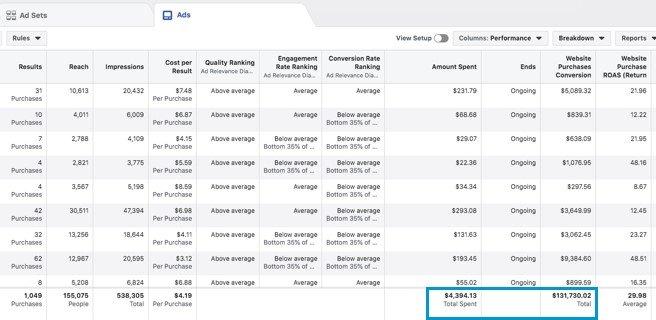
We manage a lot of campaigns like this, but there is a higher level of risk involved with these types of online marketing and direct-response advertising.
Direct-response advertising is like fuel. If your business is already on fire, it will blow up even more.
If your business is not on fire, and you add a lot of advertising dollars to the mix, you might just end up blowing your money. For this reason, newer online businesses should spend most of their social media budget on boosting their content visibility.
This is a safer bet than draining your entire budget on a shotgun advertising campaign, and it works well alongside your online reputation management strategy.
That’s how you can boost visibility for your online business. Now let’s look at your funnel.
Stage 3: Marketing Funnel
So what happens when you have all of this visibility?
You can have millions of subscribers, followers, or people who like your content. But that does not mean they are going to buy from you. That’s where sales funnel marketing comes in.

Your marketing funnel provides a step-by-step framework for how you will move people from being aware of your business to considering buying from you.
We’ve only discussed building awareness of your business, which is what most online businesses lack. So, how do you move people down the funnel to buying from you?
The answer is content, but a certain type of content. You need to share company-specific content that builds interest in what you’re selling.
You might share customer reviews, case studies, what makes your business unique, or just specific benefits of the products or services you’re selling.
If you don’t share what impact your business is having on your customers, then you’re not giving your target audience a reason to buy from you.
It doesn’t mean that all the content you should post is information about your company. You need to segment your content to target 3 groups of people:
- Top of Funnel: These are the people who are becoming aware of your business.
- Middle of Funnel: These are the engaged people that you want to sell to.
- Bottom of Funnel: These are people who are actively considering your business.
Each segment of your funnel will require different types of content and channels. For instance, you might create top-of-funnel content to build brand awareness on social media.
You might have an offer, like a free guide, to engage people and also get their contact details or email addresses. This would be content for the middle of your funnel.
Finally, you can have a series of emails or retargeting ads with the company-specific content we discussed for the bottom-of-funnel leads.
Conclusion
Remember, to succeed at marketing any online business, you must have great content, high visibility, and the right marketing funnel. If you need more help in marketing your online business, LYFE Marketing has your back.
Contact us today at 404-596-7925 to get started!
Online Business Marketing FAQs
How do you start digital marketing for a small business with no online presence?
You can start digital marketing for a small business by building a website and creating business profiles on platforms like Google and Facebook. Focus on social media channels your audience uses and share helpful content to attract your potential customers.
What is an online marketing business?
Online marketing business, or digital marketing, is the promotion of your business to connect with the target audience using digital platforms and internet channels.
What is the 3-3-3 rule in marketing?
The 3-3-3 rule in marketing is a strategy that uses three time periods, three key messages, and three platforms. This simplifies and clarifies your marketing efforts and prevents spreading resources thin.
What are the top 7 types of digital marketing?
The top 7 types of digital marketing include:
- Social media marketing
- Content marketing
- Search engine optimization (SEO)
- Email marketing
- Affiliate marketing
- PPC (Pay-per-click)
- Influencer marketing
How do I start online marketing?
You can start online marketing by creating a digital marketing campaign following these steps:
- Set your marketing goals
- Identify the target audience
- Choose the best online advertising platforms
- Create quality content
- Launch and track your campaign
Other Online Marketing Resources
- The Top 15 Online Marketing Channels
- 25 Local Online Marketing Tips for Small Business
- 25 Essential Digital Marketing Tips To Make More Money Online
- Digital Marketing 101: The First Steps To Becoming An Expert
- Online Marketing For Beginners: The Top Digital Marketing Tips For Small Businesses
- How To Use Internet Marketing Strategies To GROW!

