



Social media marketing can help small and medium-sized businesses (SMBs) to increase brand awareness, reach new customers, and generate sales at a low cost.
51% of customers use social media to find a new brand or product. 45% of SMBs use TikTok to grow their business and drive sales. Your small business can use social media marketing with no cost beyond your time.
But it’s a good idea to work with a social media expert for guaranteed results and a positive return of investment. You can start with a small investment, and if it generates results, you can invest more in online advertising to reach your target audience.
Social media marketing is the most effective way to market your small business and drive website traffic, be it organic social media marketing or social media advertising.
We have helped 4,079 small businesses grow with our social media marketing services. Based on this experience, we’ll show you how to build an effective social media marketing strategy for your small business.
Step 1: Define Your Goals
You have to identify your social media goals before you jump into social media marketing. Define what your small business wants to achieve on social media. Your goals can include building brand awareness, growing your audience, driving sales, and following social media trends.
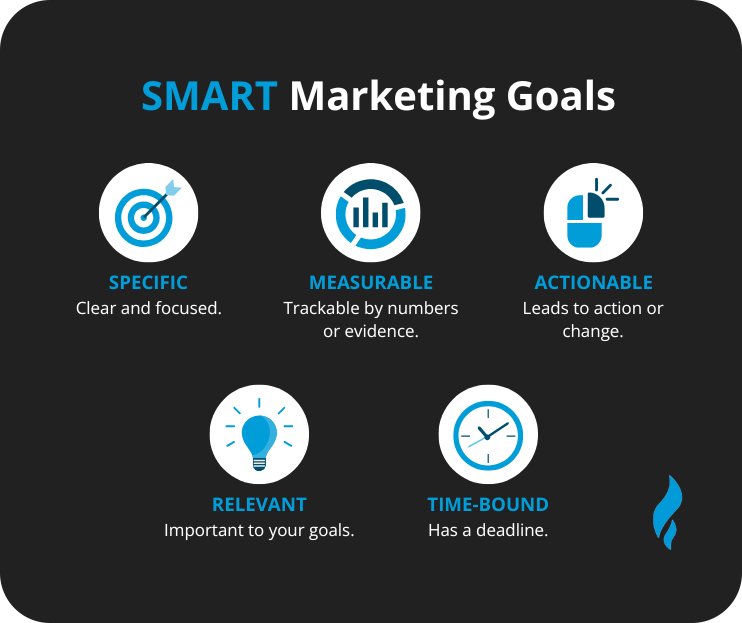
You should set SMART goals (specific, measurable, achievable, relevant, and time-bound) for the best results. For example, a realistic follower growth rate within a specified timeframe.
In Q1 2026, the average weekly follower growth benchmarks are as follows:
- 14.53% on Facebook
- 1.37% on Instagram
- 3.24% on TikTok
- 0.85% on LinkedIn
Step 2: Understand Your Target Audience
Going viral on social media is outdated in 2026. You have to reach the right audience to generate results. Reaching everyone will not support your business goal.
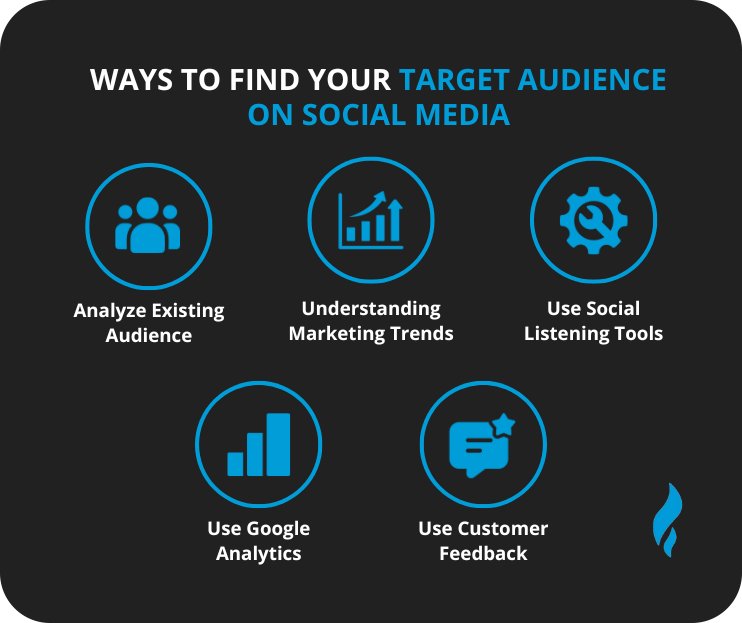
You should target a niche audience that is genuinely interested in your brand to increase your social media ROI. See our guides on social media optimization to make sure you’re following the best practices to promote your business profile in social media algorithms.
Social listening and analytics show you how your audience engages with your content and others in your niche. Understand your audience and their preferences to share content that resonates with them to drive results.
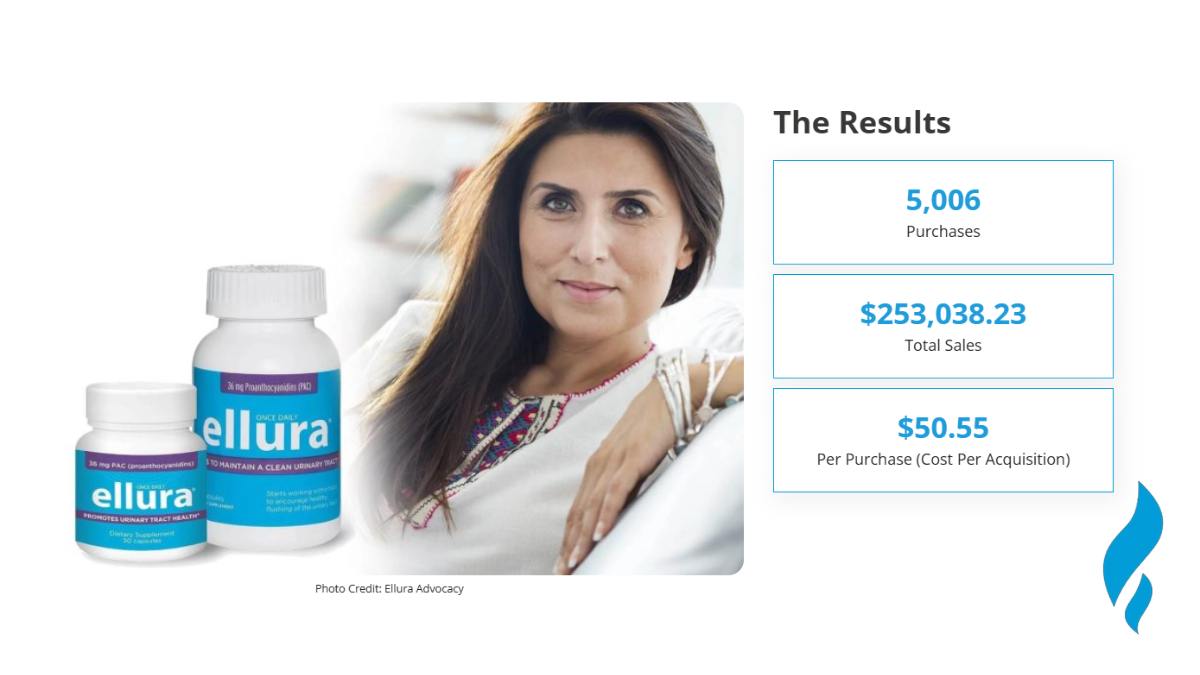
For example, we helped Ellura Advocacy generate $253,038.23 in sales revenue at $50.55 cost per acquisition with interest-based audience targeting. Our social media marketing campaign generated 5,006 purchases for them.
Step 3: Conduct A Competitive Analysis
Your small business isn’t alone on social media. Your competitors are also online and creating content, and you should learn from them. Use social media to study your competitors.
You can run a social media audit to compare your content strategy with your competitors and industry. This can help you find opportunities to test new content or social media campaigns.
Your competitors show what content connects with your audience. Also, learn from their posting habits, social media marketing tactics, and platform choices to guide your marketing strategy.
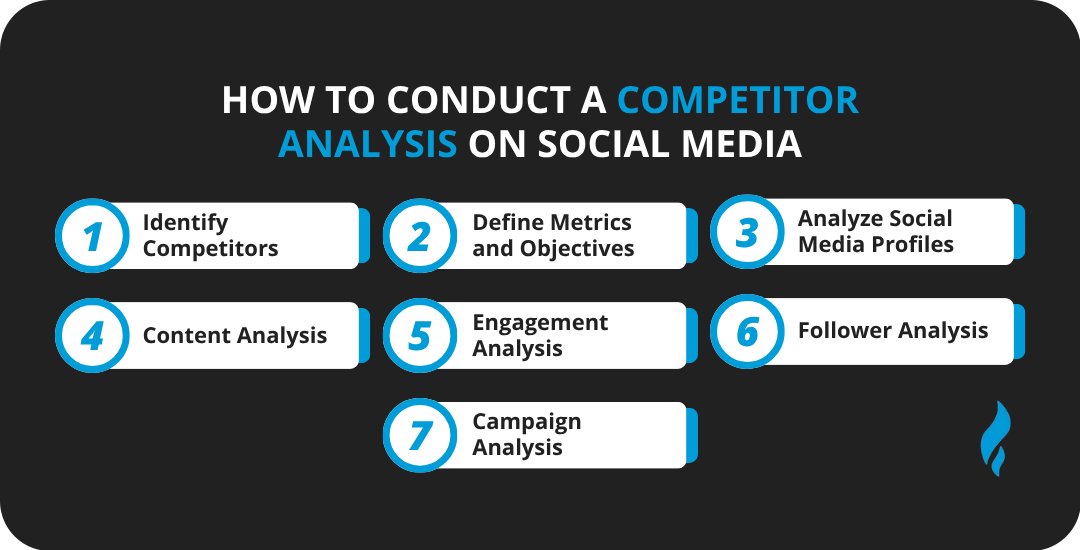
Learn from your competitor’s mistakes and improve your social media presence by avoiding their mistakes.
Step 4: Choose The Right Platforms
Business owners come to us and ask which social media should I use? You have to identify the platforms your target audience is using. The platforms your audience is most active on should be a part of your social media marketing strategy.
Use demographics and benchmark data to see where your target audience is most active. But you also need to understand the nuances of each platform to choose the right one for your business.
For more guidance, see our guide on social media advertising platforms.
Step 5: Plan And Schedule Your Content
You have to define a few key parts of your social media marketing plan, including:
- What to post or why to post?
- When to post and where to post?
- How often do you post?
You should use your audience demographics and benchmark data to answer these questions. Different content types work well on different platforms; for example, Reels work well on TikTok and Instagram.
You should keep these in mind and use the best time to post on social media to improve your engagement and reach. Also, keep a consistent posting schedule because algorithms favour that.
For example, it is better to post once daily than to post 10 times a day for 3 days and then disappear for a week. You can use the best social media scheduling tools to automate posting without any hassle.
Learn more about social media best practices to improve your brand positioning and increase brand trust.
Step 6: Collaboration With Influencers
It is not compulsory for your small business to collaborate with other brands and influencers. But doing so can increase your brand reach, trust, and sales.
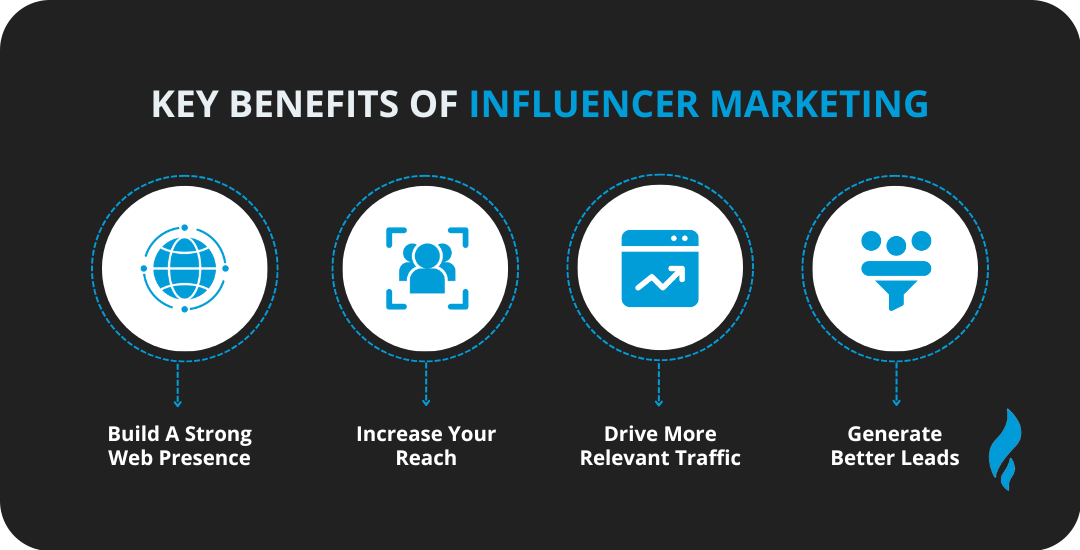
You can reach out to niche influencers who share your target audience and create user-generated content (UGC) to promote your brand. This works for social selling because influencers already have an engaged audience that trusts them.
If your social media budget allows for influencer marketing, make it a part of your social media strategy. The best part is that you don’t have to work with celebrities and expensive influencers. Micro-influencers are more affordable and generate better results because they have a more engaged audience.
Step 7: Track Your Analytics
The most effective digital marketing tip for small businesses is to use analytics to guide your social strategy. You can use free platform analytics to track metrics that matter for your business goals.
But as your business grows, you can invest in more advanced analytics tools or work with the best social media marketing agency like LYFE Marketing. Your social data can help you create data-driven campaigns for measurable results.
Data-driven marketing can help you avoid social media fails and make the most out of your marketing budget. This will also help you find underperforming posts and improve your overall performance.
LYFE Marketing helped Celebrate Relaxed Hair generate 2,125 conversions by targeting a community interested in their hair tips for women with relaxed hair. We boosted their website traffic by 225% and increased social media engagement by 432%.
Here is how you can get similar results:
1. Post Transparently
Social media users want authentic content from the best brands on social media. You should share original content that aligns with your brand voice and values. In any case, don’t try to pretend to be what you’re not. This will hurt your brand reputation.
Avoid sharing any political views or biases on your brand profiles. But if you do you should be able to stand by it. Make sure you follow social media etiquette and share quality content to increase your brand trust.
2. Use Humor
Social media users aren’t always looking for brand content, and you should respect that. Most people use social media for entertainment, so your brand shouldn’t shy away from a little humor.
You can use memes that your audience can relate to because sales pitches don’t work on social media. This will entertain your audience and make your content feel less like an ad.
3. Pick Social Trends Wisely
If something goes viral on social media, it doesn’t mean your brand should jump in. You should join social media marketing trends that align with your brand values and target audience.
Check what your audience is already engaging with and try to double down on that. But keep in mind that even if you’re posting something fun, it should support your social strategy and marketing goals.
Social media platforms can help you reach a large audience for free or at a minimal fee. You can increase your brand awareness, drive social media traffic, and attract new customers on social media.
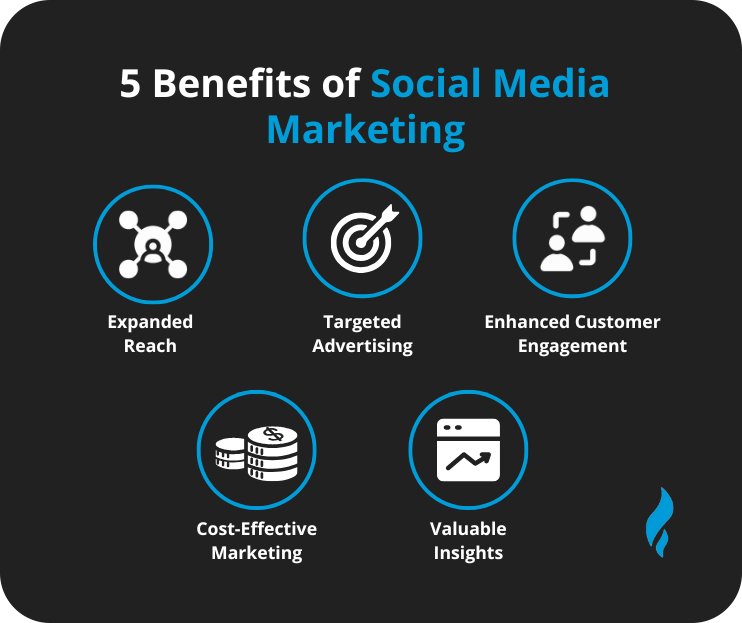
The best part is that you can engage your audience and even enhance their user experience to make them a returning customer or your brand advocate. Here are the top benefits of social media for small businesses.
1. Build Your Brand Awareness
Social media outperforms traditional marketing like radio, TV, and print media. A single social media post can share your message and reach millions of potential customers.
You can use short-form videos with the right social media marketing ideas to go viral and get millions of eyeballs for free, something you don’t see in traditional marketing. No other advertising method offers this reach at such a low cost.
2. Generate Website Traffic To Your Business
You can use social media to drive traffic to your website by adding the right call to action (CTA). The best part is that your small business can drive targeted traffic from social media to the relevant pages of your website.
This improves the user experience and increases sales and quality of web traffic. Your ranking in search engine results (SERPs) will also improve because of positive signals and traffic from multiple social media platforms.
3. Attract New Customers And Increase Sales
You can reach a relevant audience that is interested in your brand using social media for marketing. This precise targeting can grow your brand audience and also increase sales.
The best part is that engaging social media content will convert your followers into customers and existing customers into brand advocates. You can do it by sharing Infotainment content that also drives user engagement.
This will nurture your followers and target audience into customers over time. Use social media analytics to see which content resonates with your target audience. You should double down on that for more sales.
Also, use platforms’ features, like on Facebook, you can target a lookalike audience to generate leads. This will also increase your brand awareness among a newer audience.
4. Provide Customer Service And Improve User Experience
You can provide customer service on social media to build a lasting relationship with your customers. The online audience wants fast and genuine responses from brands.
You should respond timely manner to make them feel valued. Your social media strategy should include customer service to provide a personalized user experience.
Also, engage with your customers in a meaningful way to collect feedback and use it to track user sentiment and understand how your brand is perceived online.
You can use AI chatbots to provide real-time responses to customers and show that you value their opinion and feedback. The best part is that the fast response on social media can increase your brand loyalty.
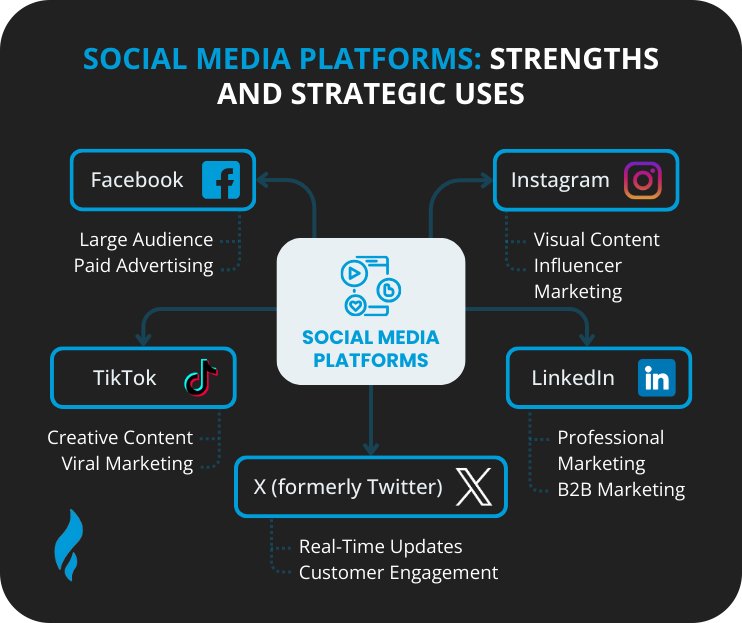
Facebook is the biggest social media platform that is ideal for extensive targeting options. The platform has over 3 billion monthly active users, and you can target a specific demographic effectively for the best results.
Our Facebook advertising services can improve your return on investment (ROI).
TikTok
TikTok has the highest engagement rates of all social media platforms. Your small business can use it to reach your target audience at a lower cost. Short-form videos and trends drive high engagement and click-through rates on TikTok.
This platform is ideal to reach a younger audience demographic who also use the platform to find brands and shop for products.
Instagram is a visual social media platform owned by Meta. You can use Instagram Marketing from Facebook Ad Manager.
Instagram has over 2 billion users who use the platform to follow trends, brands, small businesses, and influencers that align with them. You should use visual content on Instagram for the best results.
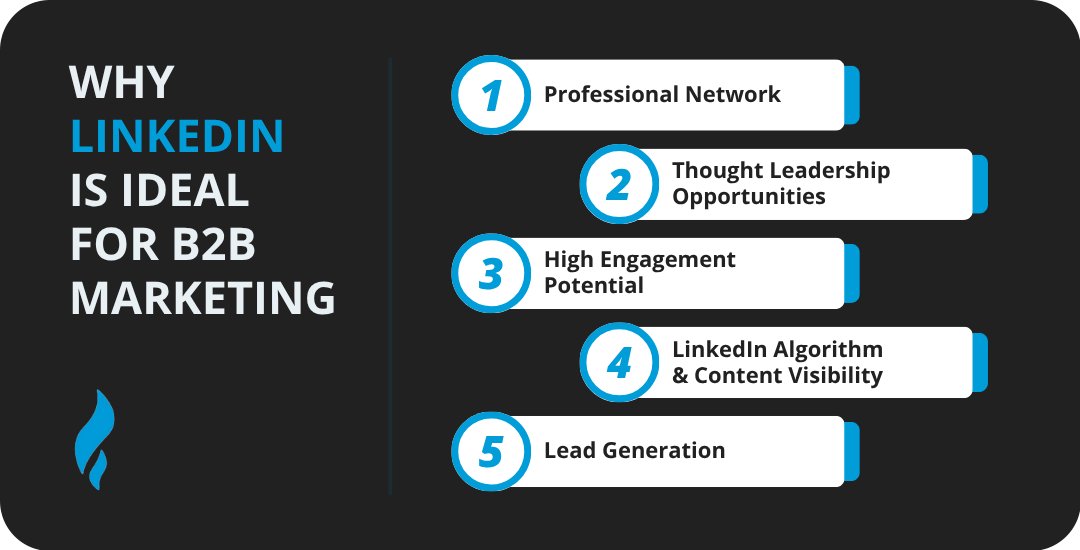
LinkedIn is the best platform for B2B social media marketing. You can use it to connect with professional networks and industry leaders. LinkedIn will add to your brand trust and credibility. You can use the platform to position your small business as an authority in your niche, depending on your business goals.
X (Twitter)
X (Twitter) has 600 million active users, but engagement rates are generally lower. You can use X (Twitter) to provide customer service and engage a niche community. Social media hashtags on X (Twitter) can increase your brand awareness.
If you’re looking for a platform just for marketing X (Twitter) is not the best platform unless you have an existing presence on the platform. You should use the platform to participate in real-time conversations and track trends.
Here are some more social media resources to help your small business better understand digital marketing on social media:
- Social Media Marketing 101
- What Is Social Media Marketing?
- How To Increase Sales On Social Media?
- Social Media Advertising Tutorial
- Social Media Marketing Statistics
- What is Social Media Management?
- How Much To Hire A Social Media Marketer?
- What Does A Social Media Ad Cost?
- 15 Reasons Why Marketing Through Social Media is a Must For Every Small Business
How To Market Your Small Business With LYFE Marketing
LYFE Marketing is just a call away. Contact us today to schedule your free social media marketing consultation. Call Us: 404-596-7925. Check out our social media advertising services today.
What is the 5 5 5 rule for social media?
The 5 5 5 rule on social media suggests that you should share 5 posts from others, engage with 5 followers, and post 5 original pieces of content each day to improve visibility and engagement. You can use it to balance content creation and interaction.
How to promote a small business on social media?
You can promote a small business on social media with a targeted strategy, engaging content, and active interaction with your audience. This involves understanding your target audience, choosing the right platforms, optimizing your profiles, and consistently posting valuable content.
What is the 5 3 2 rule for social media?
The 5 3 2 rule for social media is a content strategy that suggests for every 10 posts, 5 should be curated content, 3 should be original content, and 2 should be personal or humanizing content.
What is the 70/20/10 rule for social media?
The 70/20/10 rule for social media suggests that 70% of your content should add value and build your brand, 20% should share others’ content, and 10% should be promotional.
Other Small Business Social Media Marketing Resources
- What Is The 1% Rule In Marketing?
- Marketing a Small Business on Social Media
- Social Media Measurement: The Small Business Guide to Measure Your Social Media Performance
- 14 Tips On How to Increase Social Media Engagement
- How to Do Social Media Marketing to Outperform Your Competitors
- 50 Reasons Why Social Media Marketing is the #1 Channel for Businesses
- How to Use Social Media to Drive Massive Brand Awareness
- 6 Steps for Profitable Small Business Social Media Marketing
- Top Ranking Social Media Platforms to Grow Your Small Business
- The Complete Guide To Social Media Marketing for Business In 2026


2 Responses
This article is very informative! Right now, social media is more about people than technology. Thus, it has become a big deal for businesses. Marketers routinely integrate social media marketing with their core marketing strategies. So, they also need to update their self on the latest social media marketing trends. It is important to make good relations with the audience in your industry. That’s the best way to get personal with your audience. A good engagement rate also means a more loyal following, rather than an inflated follower count bolstered by bots and fraud accounts. You nailed it, keep posting!
Great points, Judy!